
Final Report of the Industries Development Procedures Committee (1964), chaired by T. Swaminathan
Download as PDF
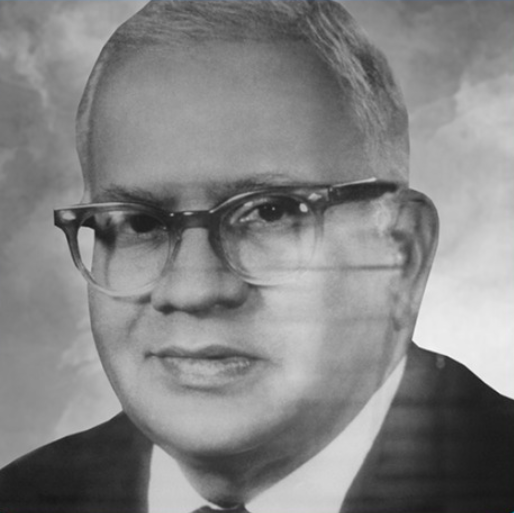
The first Swaminathan Committee, chaired by renowned bureaucrat and Secretary, Departments of Supply and Technical Development, T. Swaminathan, was established in 1964 by the union Ministry of Industry to speed up industrial development by simplifying regulations governing approval of industrial expansion plans. Its members included Bharat Ram; A. R. Foster; Lakshmipat Singhania; A. M. Murugappa Chettiar; P. Chentsal Rao; N. C. Srivastava (Adviser, Planning Commission); P. Govindan Nair (Additional Secretary, Ministry of Finance, Department of Economic Affairs); V. K. Ramaswami (Economic Adviser, Ministry of Industry); and K. J. George (Deputy Secretary, Ministry of Industry, Member-Secretary). By the 1960s, the License Raj was in full swing. Private enterprises, especially small businesses, bore the brunt of the combined problem of scarce foreign exchange and strict industrial controls. To set up an industrial enterprise, an entrepreneur had to obtain permissions at each stage: (i) preliminary approval from the Ministry of Industry, resulting in a letter of intent; (ii) a license from the chief controller of imports and exports to import capital goods; (iii) approval from the Ministry of Industry for such imports; (iv) approval for foreign collaboration from a committee chaired by the finance secretary; (v) approvals for raising funds through the capital market and for importing raw materials; and (vi) an industrial license from the Ministry of Industry to commence production.
In its report, the committee proposed different clearance-granting procedures for industries that were not considered key industries (unlike alloys, fertilizers, and industrial machinery, among others) and were comparatively export oriented and import saving. Among these procedures, where foreign exchange was not a constraint, it proposed that clearances be granted within three months of application. It recommended removing licensing requirements for industries that did not rely on imports and suggested ways to expedite the distribution of licenses for crucial raw materials. It also advised making changes to licensing application forms to make the applications simpler.
The government agreed, in principle, with all these recommendations. It agreed to issue annual licenses for industries with consistent needs and limited indigenous sources of raw materials, with restrictions on the value of the use of the licensed raw materials in the first half of the licensing period. For other industries, annual licenses would be granted to meet the industry’s requirements in the first half of the year and to authorize values not to exceed the values licensed in the previous year. Overall, the committee was of the view that the existing regulatory regime had failed to achieve its desired outcomes.
Regarding licensing, the committee believed the regulatory regime had failed to achieve practically all objectives—promoting regional dispersal, boosting import substitution, and preventing concentration of economic power. Moreover, it found that licenses had been issued beyond capacity targets even in nonessential industries, raising concerns about equitable resource allocation and potentially favoring influential parties and large businesses with excessive capacity allocations. The government’s mechanism of monitoring licenses was unsystematic, and licenses often remained unused for long periods.
In 1966, a second committee was formed under Swaminathan to review the government’s efforts to reduce industrial controls. Its report resulted in the delicensing of more than 40 industries. Distribution controls and price controls on cement, iron, and steel were also lifted through 1967. The government targeted industries that did not require substantial foreign currency for importing intermediate goods and did not pose a threat to small-scale businesses. The report also noted that it should be by and large left to the entrepreneur to decide whether to enter a field, whether to make an investment, and to what extent to invest; and it noted that the Planning Commission targets must only be indicative.
The Industries Development Procedures Committee addressed the inefficiencies and burdensome processes of the License Raj, which stifled industrial expansion and entrepreneurial activity. By advocating for streamlined procedures, selective delicensing, and a more entrepreneur-driven approach, the committee sought to align regulatory practices with the overarching aim of fostering industrial growth and minimizing foreign exchange dependency.