
The Indian Railways Report–2001: Policy Imperatives for Reinvention and Growth (2001), chaired by Rakesh Mohan
Download as PDF
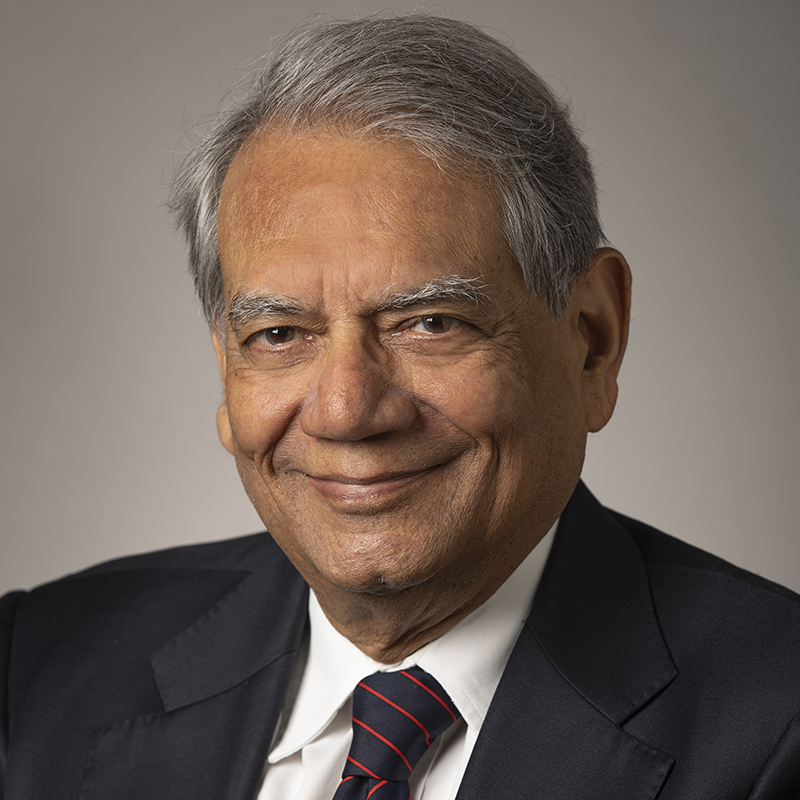
The Railway Board, under the Ministry of Railways and Nitish Kumar, convened an expert group on December 31, 1998, to study the railway sector comprehensively. This initiative followed the successful model of the Expert Group on Commercialisation of Infrastructure Projects, which culminated in the India Infrastructure Report in 1996. The new expert group, or committee, was chaired by Rakesh Mohan, Former Director General, National Council of Applied Economic Research. Members included Kito De Boer (Director, McKinsey & Company Inc.); R. Gopalakrishnan (Executive Director, Tata Sons Limited); Omkar Goswami (Chief Economist, Confederation of Indian Industry); C. M. Khosla (Former Member (Traffic), Railway Board); Ashok Lavasa (Joint Secretary, Ministry of Finance); S. Mukherjee (Executive Director, Industrial Credit & Investment Corporation of India); Nasser Munjee (Managing Director, Infrastructure Development Finance Company Limited); S. K. N. Nair (Senior Consultant, National Council of Applied Economic Research); B. N. Puri (Adviser (Transport), Planning Commission); G. Raghuram (Professor, Indian Institute of Management); P. Rajagopalan (Financial Commissioner (Railways)); M. Ravindra (Former Chairman, Railway Board); K. N. Shenoy (Chairman, Asea Brown Boveri Ltd.); Saurabh Srivastava (Executive Chairman, IIS Infotech Limited); D. P. Tripathi (Secretary, Department of Food Processing Industries, Ministry of Agriculture, and former Secretary, Railway Board); and S. Suryanarayanan (Former Additional Member (Planning), Railway Board and Member-Secretary).
The committee noted that Indian Railways (IR), a critical component of India’s transportation infrastructure, had faced significant financial and operational challenges in recent years. The economic liberalization of the 1990s increased competition from road transport, exacerbating IR’s declining service quality and rising costs. Despite reforms recommended by the Acworth Committee back in 1924, including separating railway finances from the general government budget, IR continued to operate as a government department, leading to inefficiencies. By the late 1990s, IR’s financial performance had deteriorated to the extent that it could not pay a dividend to the government for the first time in 17 years during the fiscal year 2000/01. This financial distress was highlighted by an operating ratio of 98.8, indicating that expenses were nearly equal to revenues.
The committee’s findings revealed that both costs and revenues grew at an annual rate of 13 percent over the past decade, but costs outpaced revenues in recent years. Investment in unremunerative projects and politically motivated new lines further strained IR’s finances. Operational challenges included a high degree of vertical integration, with IR managing noncore activities such as manufacturing and catering, which diverted the focus from its core transportation business. The outdated business structure and lack of market responsiveness due to IR’s status as a government department hindered its ability to meet customer demands. Freight customers demanded higher reliability, flexibility, and competitive pricing, while passenger services suffered from poor quality and lack of differentiation between the value and premium segments. Additionally, political pressures hindered IR’s ability to adjust prices and cut costs, leading to financial mismanagement. Social obligations, such as subsidizing passenger fares and maintaining unviable branch lines, were not matched with adequate government funding, exacerbating financial strain.
To address these issues, the committee recommended a comprehensive restructuring of IR. This included separating policy, regulatory, and management functions to reduce confusion and improve governance and establishing clear performance indicators for management and regulators to enhance accountability and efficiency. The committee emphasized the need to differentiate clearly between IR’s social obligations and commercial operations, implementing accounting systems that reflect the costs of social obligations and ensuring these are adequately funded by the government. Investment in infrastructure was identified as a priority, focusing on safety, modernization, and capacity expansion to meet future demand. The committee considered three possible scenarios for the next 15 years, including “Low Growth” and “Medium Growth” based on a “Business as Usual” framework, and a “Strategic High-Growth” scenario for the Indian Railways. The strategic high-growth scenario proposed required Rs. 70,000 crore over the next five years, supported by government funding and loans from multilateral institutions.
In light of international experience, the committee advocated commercializing IR’s operations rather than pursuing wholesale privatization. This would involve restructuring IR along business lines, spinning off noncore activities, and adopting commercial accounting practices. To drive these reforms, a leadership team committed to modernizing IR and capable of implementing the necessary changes was deemed essential, as was hiring external professionals with commercial expertise. The recommended financing strategy included a combination of government support, internal generation of funds, and market borrowing to achieve the envisioned transformation and ensure IR’s financial viability and service-quality improvements.
Based on the recommendations of the committee, key policies implemented include the formation of the Railway Development Authority, the introduction of private trains, and the ongoing development of dedicated freight corridors. Various operations of the Indian Railways were also spun off into separate entities, such as RailTel, IRCTC, and Rail Vikas Nigam Limited. Despite progress in several areas, some recommendations, such as the full establishment of safety and research councils and comprehensive accounting reforms, are still being gradually implemented.
The report highlighted the operational inefficiencies and financial challenges faced by Indian Railways, stemming from outdated structures and conflicting mandates. It recommended restructuring governance, commercializing operations, and modernizing infrastructure to enhance efficiency and meet future demands.