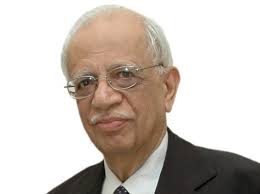

Report of the Committee on Capital Account Convertibility (1997), chaired by S. S. Tarapore
Download as PDF
After the 1990/91 balance-of-payments crisis, the highest priority on the reform agenda was accorded to restoring momentum to growth. In response to the crisis, structural reforms liberalized trade, industrial policy, and foreign investment policy, and financial-sector reforms allowed freer entry into financial markets. But, for growth, in addition to mobilizing domestic policy, it was important to attract foreign capital. The Committee on Capital Account Convertibility (CAC) was set up by the Reserve Bank of India (RBI) in May 1997 under the chairmanship of S. S. Tarapore to study how to make it easier to convert local financial assets into foreign financial assets and vice versa at market-determined exchange rates. Members included Surjit Bhalla; M. G. Bhide; Kirit Parikh; and A. N. Rajwade.
The committee noted that while capital controls help in insulating the economy from foreign volatility, over the long run they progressively become ineffective, costly, and distortive. It also found that capital movements could have adopted the guise of trade transactions and the cross-border movement of gold since current transactions were relatively freer following the institution of International Monetary Fund conditionalities. In addition to facilitating greater access to capital, the committee noted, CAC would lead to a more competitive financial market, improve the allocative efficiency of capital, and have a disciplining effect on domestic policy.
The committee suggested three crucial preconditions to modulate the pace of instituting CAC and prevent backtracking, based on its survey of historical international experience. First, fiscal consolidation should reduce the ratio of the gross fiscal deficit to GDP from 4.5 percent in 1997/98 to 3.5 percent in 1999/2000 and avoid amortizing government debt by issuing new securities. Second, it recommended that the RBI target inflation in the band of 3–5 percent between 1997/98 and 1999/2000 and that the RBI be given the independence to carry out this objective. Finally, the financial sector should be consolidated through complete decontrol of interest rates, reduction in nonperforming assets, and reduction of the cash reserve ratios of banks. It further recommended that a credible exchange rate policy be maintained, albeit with interventions by the RBI when the RBI deemed it necessary, and that duties and tax rates on foreign capital flows across countries be rationalized to avoid distortionary effects.
Key suggestions regarding the preconditions, such as inflation targeting and the reduction of the cash reserve ratios, were not fully adopted. The fiscal discipline envisaged by the committee was partially realized through the Fiscal Responsibility and Budget Management Act of 2004, but fiscal deficits remained above recommended levels. Per the 2006 Tarapore Committee, of the 40 recommendations of the 1997 committee, 19 were partially implemented, 15 were fully implemented, and 6 were not implemented, and the RBI took 23 measures in addition to the recommendations. In 2016, the RBI adopted inflation targeting as its monetary policy objective.
The committee emphasized the importance of gradual and conditional adoption of capital account convertibility, linking it to fiscal consolidation, inflation targeting, and financial sector reforms. While many recommendations were partially implemented, the committee's work laid a foundation for subsequent reforms in India's financial policy framework.