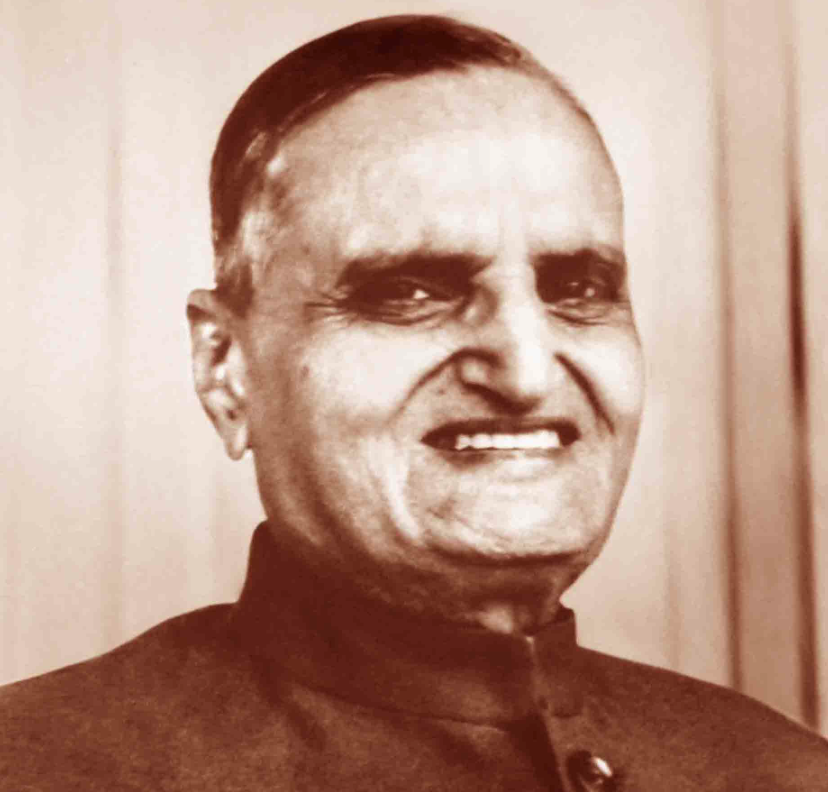

Report of the Committee on Drugs and Pharmaceutical Industry (1975), chaired by Jaisukhlal Hathi
Download as PDF
Between 1957 and 1963, the government undertook measures to encourage foreign investment in India, despite general political hostility, and numerous outside pharmaceutical companies set up manufacturing subsidiaries in the country. By the 1970s, these firms had established a stronghold on the sector. In 1973 there were around 2,800 companies that produced bulk drugs (worth INR 660 million) and formulations (worth INR 3,700 million). Yet close to 80 percent of total output came from 118 firms, of which 79 controlled the production of prescription drugs; 47 among the latter were foreign companies. Where Indian firms saw their profits decline in early 1970s, their foreign counterparts reaped handsome gains despite price controls. These developments generated political backlash. In Parliament, members raised the need for government-dominated industrial policy in the pharmaceutical industry, questioned the growing influence of multinational corporations, and urged changes in the pricing policy for drugs produced locally. Consequently, the union Ministry of Petroleum and Chemicals appointed the Hathi Committee to issue a detailed report on the sector and suggest measures for effective public sector manufacturing and research and development on essential drugs. It was chaired by Jaiskhlal Hathi, Former Union Minister, with members Yashpal Kapur (Member of Parliament); Vasant Sathe (Member of Parliament); Ranen Sen (Member of Parliament); K. S. Chavda (Member of Parliament); C. M. Stephen (Member of Parliament); M. L. Dhar (Director of Central Drugs Research Institute); B. D. Tilak (Director of National Chemical Laboratory); S. S. Marathe (Chairman of the Bureau of Industrial Costs and Prices); Vinod Kumar (Joint Secretary of the Ministry of Petroleum & Chemicals); P. S. Ramachandra (Drugs Controller at DGTD); B. V. Ranga Rao (Centre for Studies in Policy Studies); M. K. Rangnekar (Commissioner of Food and Drug Administration Government of Maharashtra); and P. R. Gupta (Adviser to Ministry of Petroleum & Chemicals and Member-Secretary). The committee was asked to recommend ways of promoting domestic pharma with the view of maintaining a balanced regional dispersal of small-scale firms.
The Hathi Committee report found that despite the production of INR 370 crores’ worth of medical products in India in 1973, modern medicines reached only about 20 percent of the population. It focused on adopting new medical technology and quality controls for medicines, providing support to small-scale enterprises, instituting price caps on and public accessibility to certain basic drugs, ensuring access to drugs in rural areas, and institutionally facilitating the equitable distribution of essential drugs and raw materials. The report was a game changer: It heavily tilted the scales in favor of Indian drugmakers. The government allowed Indian firms to make 4 units of formulations for every unit of bulk produce, and it limited multinational corporations to a ratio of 2. Later, the Janata Party government further changed the ratio for domestic firms to 10. The committee also proposed that foreign firms be required to shift from manufacturing highly profitable formulations to manufacturing basic drugs within three years. It suggested that these firms share 50 percent of their production of bulk drugs with Indian firms and be afforded licenses for it only when their Indian counterparts were not forthcoming with production. It also placed constraints on foreign companies’ capacity expansion and equity share.
The report recommended setting up a National Drug Authority with the aim of tackling the problem of large-scale production and distribution of drugs, but this suggestion was ignored. (To read more about the trajectory of the pharmaceutical market in India, refer to this essay.)