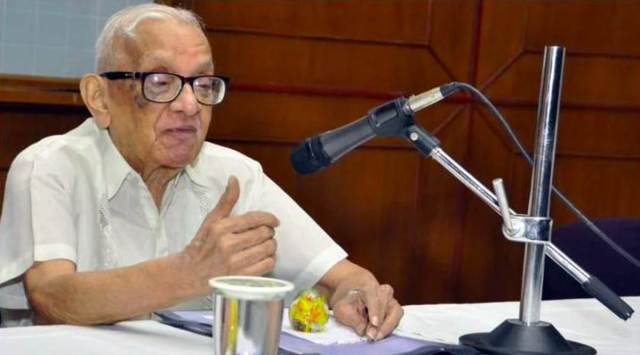

Report of the Committee to Examine Principles of A Possible Shift from Physical to Financial Controls (1985), chaired by M. Narasimham
Download as PDF
The Ministry of Finance convened a committee in 1984 under the chairmanship of M. Narasimham, Principal, Administrative Staff College, to examine a possible shift from physical to financial controls and the principles that should govern such a shift. Members included Y. K. Alagh (Chairman, Bureau of Industrial Costs & Prices); M. Dutta Chaudhari (Professor at Delhi School of Economics); I. S. Gulati (Centre for Development Studies); Bimal Jalan (Special Secretary and Chief Economic Adviser, Ministry of Finance); S. S. Nadkarni (Chairman, ICICI); M. R. B. Punia (Chairman, IDBI); K. V. Ramanathan (Secretary, Planning Commission); C. Rangarajan (Deputy Governor, RBI); A. Sengupta (Special Secretary to the Prime Minister); S. S. Sidhu (Secretary, Ministry of Industry); C. C. Somaiah (Secretary, Ministry of Law, Justice & Corporate Affairs); A. Bagchi (Officer on Special Duty, Ministry of Finance and Member-Secretary); M. S. Ahluwalia (Additional Secretary to the Prime Minister); and S. D. Srivastava (Secretary, Ministry of Industry and Company Affairs). Its first report, dated January 25, 1985, noted that aggregate industrial output had increased five times since independence, at a rate of 6 percent between the 1950s and 1980s, and the industrial structure was diversified. But it added that the development of the industrial economy came at the cost of inefficiencies, which it ascribed to technological obsolescence, lack of internal competition, and insufficient attention to product quality. It pointed to the widely shared view that the entire framework of industrial policy needed to be reviewed and reformed.
With respect to industrial licensing, the committee recommended that reforms be made in three directions: making the licensing system rule based, limiting the domain of licensing, and substituting licensing controls with financial instruments such as fiscal and credit measures. The committee made the following specific recommendations. First, in certain industries, the requirement of a license should be dispensed with altogether. The criteria it identified for delicensing included industries producing items that could be imported freely, industries in which there is a prima facie need for creating capacity, industries in which technology is changing fast, items of mass consumption, and items with high export potential. Second, it recommended reviewing the policy of reservation for small-scale production units, which restricted investment, growth, and production. It suggested that protection should be sought through fiscal measures and infrastructure creation to support industries with neutral scale and high employment potential. Third, it recommended expanding the list of industries listed under Section 22A of the Monopoly and Restrictive Trade Practices (MRTP) Act, under which enterprises could invest without needing an MRTP clearance.
The second report, submitted in April 1985, made recommendations in four areas: control over capital-goods imports, foreign-collaboration approval, capital-issue control, and exchange control. The committee noted that since capital goods are highly heterogeneous and used in production, controls can lead to distortions whose nature and magnitude is difficult to determine. The committee thus recommended moving from quantity-based to price-based controls and imposing limited tariffs on imports. It further suggested procedural reforms in foreign-collaboration and investment approvals, emphasizing the need to simplify approval of proposals for foreign technical collaboration. For capital issues, the committee recommended that a regulatory body similar to the US Securities and Exchange Commission be set up, and it suggested raising the exemption limit for capital-issue approvals from Rs. 1 crore to Rs. 3 crores to further liberalize the capital market. Finally, it recommended procedural reforms in exchange control to simplify and delegate authority for certain foreign exchange transactions, while cautioning against liberalizing exchange rate control given potential balance-of-payments concerns.
Several recommendations were accepted. The 1990s saw wholesale delicensing of several industries, the establishment of the Securities and Exchange Board of India to regulate capital issues, a significant reduction in import duties, and the liberalization of the current account for foreign exchange transactions. The MRTP Act was also repealed and replaced by the Competition Act (2002).
The Narasimham Committee highlighted inefficiencies in India's industrial and regulatory framework, recommending a shift from physical to financial controls through measures like delicensing, procedural reforms, and market-based mechanisms. Its proposals laid the groundwork for significant liberalization in the 1990s, shaping India’s modern industrial and financial policy landscape.