
India’s financial regime was repressive before the 1990s. This changed with the liberalization of trade and industrial policy in 1991, which demanded a healthy institutional environment for financial services. Importantly, the reforms were driven not just by an external crisis but an internal consensus on the need for sequenced liberalization across sectors, which ensured that liberalization would be sustained by successive governments. In line with the required reforms, early measures involved the development of financial institutions and markets and setting up complementary changes in the monetary, fiscal, and external sectors.
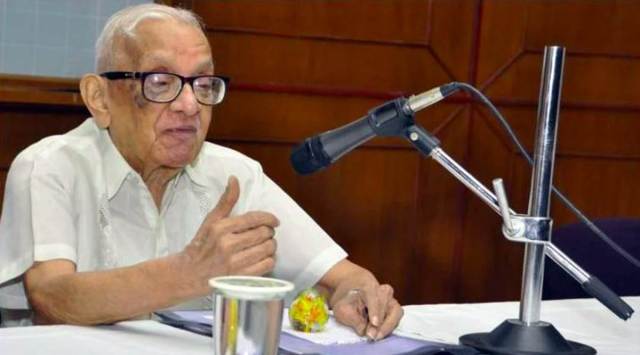
Finance Minister Manmohan Singh proposed a high-level committee to look into all aspects of the structure and function of Indian banks and development-finance institutions. A committee was established under M. Narasimham, ex-governor of the Reserve Bank of India and Principal, Administrative Staff College, and asked to suggest ways to improve the operational autonomy of the financial-services sector and make the sector more efficient, productive, and profitable. Committee members included A. Ghosh; M. N. Goiporia; S. S. Nadkarni; N. Vaghul; M. R. Shroff; Y. H. Malegam; M. Datta-Chaudhari; and K. J. Reddy.
Financial repression in the preceding decades had hampered the growth of both savings and financial markets. The banking and tax regime did not inspire confidence among depositors and investors, and banks were not equipped to lend sufficiently because liquidity requirements were stringent. Added to this were the distortions created by priority-sector lending through credit instruments at low, administered interest rates. For sectors that did not qualify as priority sectors, this meant less credit and higher rates. Moreover, because loans were often issued without collateral, a number of borrowers ended up defaulting, leading to the creation of nonperforming assets.
The Narasimham Committee’s report noted that directed investments, directed-credit programs, and a high-interest-rate structure were bad outcomes of the specific policies. Some major recommendations included reducing the statutory liquidity ratio, the percentage of a bank's net demand and time liabilities to be maintained in liquid assets, from 38.5 to 25 percent, and the cash-reserve ratio, the proportion of deposits that banks must hold in reserve with the central bank, from 15 percent to around 5 percent, deregulating interest rates, granting autonomy to the banking sector, establishing an Asset Reconstruction Fund tribunal, and phasing out the directed-credit program. The committee strongly recommended that special tribunals following the pattern recommended by the Tiwari Committee be set up to accelerate the recovery of bad loans. It also sought to do away with dual control of banking by the Reserve Bank of India and the Ministry of Finance and recommended that the former be made the sole authority. This was published as a special note by Prof. M. Dutta Chaudhuri and M. R. Shroff, who were members of the committee.
However, implementing these suggestions was not politically viable. Phasing out credit planning was heavily criticized because the planning had helped banking services penetrate to rural areas and encouraged small-scale industries and agriculture. Nevertheless, the general assessment of the report set the stage for liberalization of financial services in the following years.
The committee report highlighted inefficiencies in India’s financial system and proposed reforms to enhance banking autonomy, reduce financial repression, and improve credit allocation. Despite political resistance to some recommendations, the report laid the foundation for the liberalization of financial services in subsequent years.