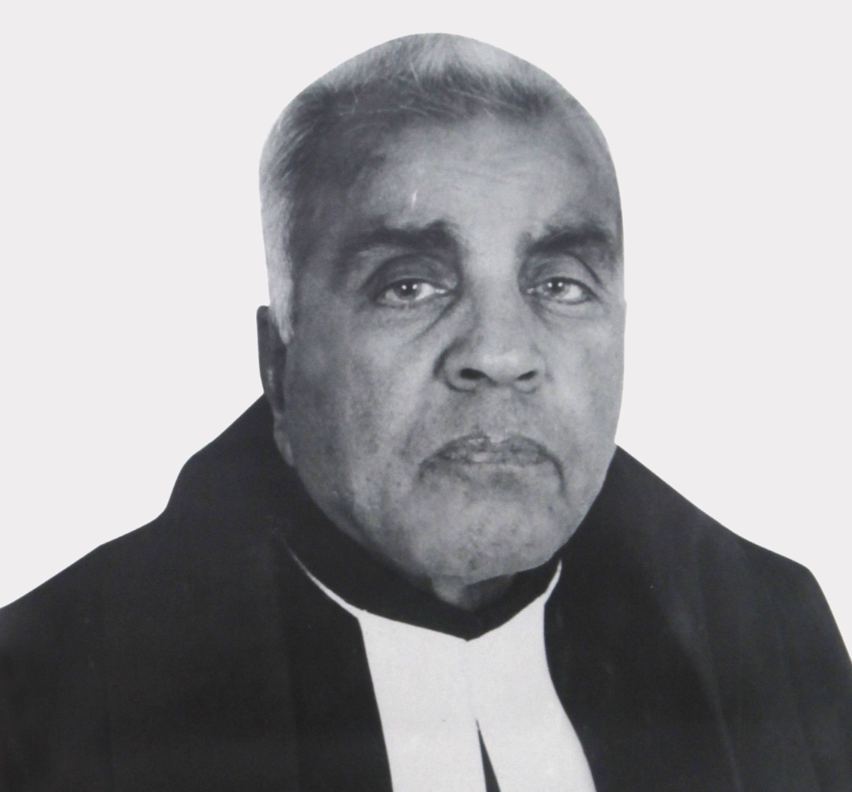

Report of the High Powered Expert Committee on Companies and MRTP Act (1978), chaired by Rajinder Sachar
Download as PDF
As a result of obsolete provisions of the Companies Act of 1956 and frequent amendments to it, which rendered it cumbersome and not amenable to easy interpretation and understanding, the Ministry of Law, Justice, and Company Affairs, under Shanti Bhushan, Minister of Law, Justice & Company Affairs, convened a committee in 1978 to comprehensively review it and provide recommendations for revamping it, along with the Monopolies and Restrictive Trade Practices Act of 1969. The committee was chaired by Rajinder Sachar, Judge, High Court of Delhi. It included members S. Ranganathan (Member of Parliament); R. D. Gattani (Member of Parliament); Bedabrata Barua (Member of Parliament); F. S. Nariman (Senior Advocate at Supreme Court); Shantanu N. Desai (former President of ICAI); M. Srinivasa Rao (former President of ICWAI); D.C. Mothari (Industrialist); Keshub Mahindra (Industrialist); K. P. Tripathi (Labour leader); K. K. Ray (Barrister-at-law); and M. K. Kukreja (Secretary).
Regarding the Companies Act, the committee found that its sheer length—over 700 sections and numerous rules—made it an unwieldy and overly complex piece of legislation. The frequent need for amendments to keep up with changing times further compounded the issue. This complexity hindered the act’s effectiveness and led to bureaucratic delays in implementing it. A major focus area was enhancing managerial autonomy and effectiveness. The committee recommended fixing managerial remuneration based on a company’s effective capital, with government approval required only for remuneration exceeding set limits for each capital category. This was aimed at granting more powers to professional managers.
Greater participation of shareholders and workers in management was another key principle. The committee stressed corporate social responsibility, proposing that companies publish an annual Social Report detailing their corporate-social-responsibility activities. For companies with over 1,000 employees, the inclusion of worker-directors elected through secret ballot was recommended, but a two-tier system like that in the UK was considered inappropriate in the Indian context. To improve transparency, insider trading was to be strictly regulated, with public companies mandated to publish audited half-yearly results in addition to annual reports. The committee also favored abolishing unlimited companies and categorizing private companies as small companies and others to promote growth of the small business sector. Reducing government approvals and bureaucracy was a major focal area. The committee proposed instituting an independent quasi-judicial Company Law Board with powers to impose penalties, rather than having the government handle all such matters.
Turning to the Monopolies and Restrictive Trade Practices Act, the context was growing concerns since the 1960s over increasing consolidation of economic power and the rise of large industrial houses. Despite the act’s stated objectives, it had failed to prevent monopolistic practices from flourishing. A key issue identified was the ambiguity of phrases like “dominant undertaking” that relied on unclear market-share criteria. The committee recommended reducing the market-share criterion for dominance from one-third to one-fourth. The committee was critical of using the number of workers employed as a criterion for defining monopolies, finding it impractical given fluctuations in the workforce. They proposed relying more on economic variables.
A startling finding was that the central government decided 92.6 percent of cases between 1974 and 1978 without resorting to the Monopolies Commission, defeating the purpose of having an expert regulatory body. The committee strongly recommended mandatory commission referrals for all significant cases. Data inadequacies also hampered effective monitoring and enforcement, with the report urging better coordination between departments like the Directorate general of Technical Development and the Central Statistical Office for streamlined data collection on firm size, assets, and market share. Perhaps the most glaring issue was the exemption granted to government-controlled companies from provisions of the Monopolies and Restrictive Trade Practices Act. The committee argued forcefully for treating public and private sector firms on an equal footing when examining monopolistic practices. Among the key procedural reforms proposed was amending Sections 21–23 to mandate prior commission approval for any expansion by dominant undertakings. The committee also recommended empowering the commission to directly issue final orders on mergers and acquisitions instead of relying on the government.
The class of unlimited companies was abolished to streamline corporate structure, but the reclassification of private companies into small sector and other was not comprehensively implemented. Stricter regulations were implemented for insider trading, including mandatory notifications to the board and restrictions on trading shares within specific periods. The suggestion of a worker-director was not implemented.
The Sachar Committee focused on addressing the complexities of the Companies Act, bureaucratic delays, and ineffective oversight under the Monopolies and Restrictive Trade Practices Act. Its recommendations aimed to streamline corporate regulations, enhance managerial autonomy, and ensure fair competition by improving clarity, reducing government interference, and strengthening regulatory mechanisms.