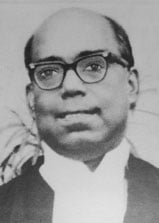

In the early 1960s, as the government was pushing for greater industrialization by directing investments through issuance of licenses, there were growing concerns about concentration of economic power. The Monopolies Inquiry Commission was created in 1952 under the Commissions of Inquiry Act to examine this concentration in the private sector and the creation of monopolies. In general, the licensing regime put big businesses in an advantageous position to secure large amounts of capital because they represented less of a business risk. Consequently, these powerful firms were able to expand. Meanwhile, foreign manufacturers, hindered by tariffs and import restrictions, were compelled to collaborate with big Indian businesses to access the domestic market. Chaired by K. C. Dasgupta, Judge, Supreme Court of India, the committee's members included G. R. Rajagopal; K. R. P. Aiyangar; R. C. Dutt; and I. G. Patel.
In its report, the commission did not provide a strict definition of concentration but identified two main types: product-wise concentration, in which a single entity or a small group controls the production and distribution of a particular commodity; and country-wise concentration, where a large number of concerns engaged in the production or distribution of different commodities are in the controlling hands of one individual, family, or group of persons. The first was typically associated with joint-stock companies and the advantages of economies of scale. To measure market power, the commission employed concentration ratios in terms of production or sales (high concentration: top three producers’ share ≥ 75 percent; medium concentration: 60–74.99 percent; low concentration: 50–59.99 percent; nil concentration: < 50 percent).
The commission’s report pointed to significant concentration in consumer industries, accompanied by monopolistic practices such as price fixing, exclusive contracts, tie-ups, and discrimination against particular buyers. However, the report did not view concentration as inherently problematic. While acknowledging some potential benefits of concentration in terms of economies of scale and efficiency, the commission emphasized the need for regulation to avoid its harmful consequences, such as restricted competition, market manipulation, and consumer exploitation. This regulation aimed to promote optimal production, fair distribution, and consumer welfare within an environment of controlled concentration. It proposed establishing an independent statutory commission with the authority to investigate and prevent restrictive practices.
The majority of industry associations and influential industry leaders, including J. R. D. Tata, supported this proposal. There was a consensus among industry leaders that despite being empowered by various licensing-related laws, the government lacked the ability to effectively control harmful monopolies. To realize its recommendations, the commission drafted in its report the Monopolies and Restrictive Trade Practices Bill, which eventually inspired the Monopolies and Restrictive Trade Practices Act of 1969. Last, the commission noted that public sector monopolies were as bad as private sector ones, that administrative corruption ought to be checked, and that an independent press was essential to serve consumer interests.
R. C. Dutt wrote a note of dissent on the report, recording his disagreements with the majority view on several key issues. He felt that the commission should have focused more on tackling the country-wise concentration by certain industry houses than the product-wise or industry-wise concentration that could be explained by economic factors. He also argued that it would be more appropriate to consider the managing agency as an instrument rather than a cause of concentration. He was of the opinion that the licensing system and public enterprises, despite their inefficiencies, could be used to check the concentration of economic power.
The commission examined the concentration of economic power in India and its effects on competition and consumers. It proposed regulatory reforms to address harmful practices while acknowledging the efficiencies of concentration, influencing the Monopolies and Restrictive Trade Practices Act of 1969.