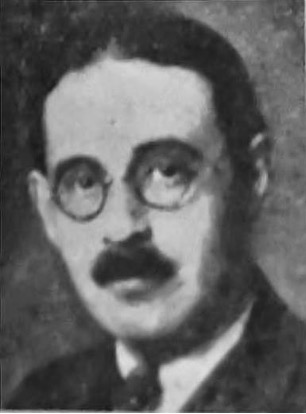

In 1926, Harold Laski is appointed chair of the Department of Government at the London School of Economics, where he would influence future Indian leaders with socialist and democratic ideals.
Harold J. Laski was a prominent British economist and political thinker who influenced many future Indian leaders by championing socialist and democratic ideals. In addition to his academic career, he was a prominent figure in the British Labour Party and served as its chair from 1945 to 1946.
Laski believed in pluralism in his early years, as seen in his books Authority in the Modern State (1919) and The Foundations of Sovereignty (1921). By the mid-1920s, however, he was increasingly influenced by Marxism and became a staunch socialist; he began highlighting the importance of a strong state to enable equitable development in a democracy. Laski became a key member of the Fabian Society, a socialist group that promoted social and political reform in Britain and abroad. A Grammar of Politics (1925), Liberty in the Modern State (1933), Democracy in Crisis (1935), and The State in Theory and Practice (1935) were some of his significant works around this time.
Laski asserted that cooperation among nations and the end of war could only be achieved under socialism. He was a fervent critic of capitalism, believing that such a system requires war to sustain itself.
Laski’s students — including Jawaharlal Nehru, K. R. Narayanan, V. K. Krishna Menon, P. N. Haksar, and B. K. Nehru — were influenced by his view that freedom depends on economic equality; after Indian independence in 1947, these nationalists pursued policies of redistributing wealth and preventing economic concentration in the Indian economy.
Granville Eastwood, Laski’s biographer, quoted an unnamed Indian parliamentarian saying that there was a “vacant chair at every Cabinet meeting in India, reserved for the ghost of Professor Laski."[1] Laski’s advocacy of socialism, democracy, and civil liberties thus helped shape the ideas and ideals of Indian nationalism and played a crucial role in the country’s economic trajectory.
Notes
Eastwood, G. Harold Laski. (1977). Mowbrays, London.