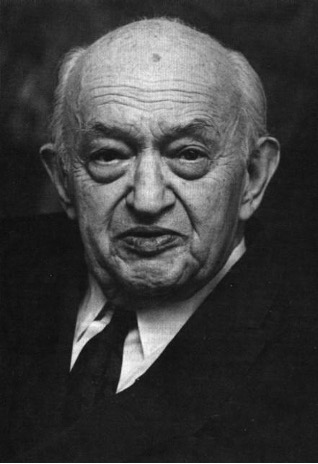

In 1943, Rosenstein-Rodan devises the big-push model of development, which would shift India’s focus to industrialization after independence.
Paul Rosenstein-Rodan was an economist born in a part of Austria-Hungary that is now Polish. He is known for his contributions to the theoretical literature on economic development and growth, particularly in the context of post–World War II Europe.
Rosenstein-Rodan created the big-push model of development in 1943, which held that a coordinated and simultaneous effort to develop multiple industries and infrastructure projects would catalyze economic development.
Investment by entrepreneurs in one sector in a country depends on investments in other sectors. As Bhagwati (1985)[1] noted, “An entrepreneur investing in shoes would not be sure of selling shoes unless others simultaneously invested in textiles, etc.” In other words, the social marginal product of investment is greater than the private marginal product. Complementarity of industries meant that the state had to plan and invest across industries rather than hope for a coincidence of autonomous investment by the market.
The big-push model played a crucial role in shaping India’s economic policies, particularly in the early years of independence. The government provided funding and other incentives to support the development of heavy industries. The Second Five-Year Plan (1956–61) in particular focused on infrastructure development — for example, through building roads, ports, and power plants — to spur rapid industrialization and, in turn, economic growth.
Over the years, however, the big-push model’s effectiveness was questioned. Critics[2] argue that the model can lead to the misallocation of resources and the creation of inefficient industries that might not be sustainable in the long run. Additionally, the model might not address deeper structural issues in the economy, such as inequality and poverty.
Notes
[1] Bhagwati, J. Essays on Development Economics, vol. 1. Cambridge, MA: MIT Press, 1985.
[2] Myint, H. (1960), “The Demand Approach to Economic Development,” Review of Economic Studies, 27(2), 124–32. ; Ellis, H. S. (1958), “Accelerated Investment as a Force in Economic Development,” Quarterly Journal of Economics, 73(3), 486–95. ; Viner, J. (1958). Stability and Progress: The Poorer Countries” Problem. In: Hague, D. (eds) Stability and Progress in the World Economy. International Economic Association Conference. Palgrave Macmillan, London. https://doi.org/10.1007/978–1-349–08446–3_4