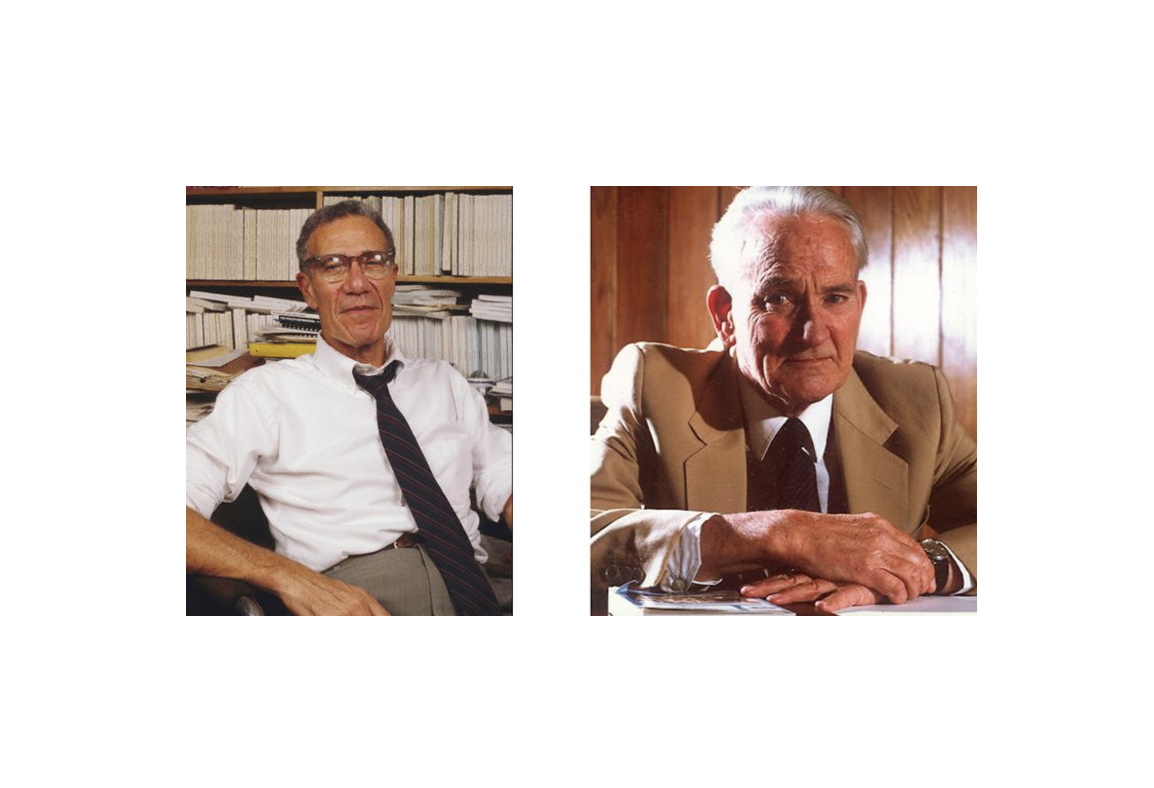

In 1956, economists Robert Solow and Trevor Swan develop the Solow-Swan growth model to explain long-run economic growth.
The Solow-Swan growth model, developed independently by MIT economist Robert Solow and Australian economist Trevor Swan in 1956, is a framework in macroeconomics that explains long-term economic growth by capital accumulation, labor growth, and technological progress. The model posits that an economy’s output is determined by its capital stock, its labor force, and the productivity of these inputs, which is enhanced by technological advancement.
In the model, economies achieve steady-state growth when capital, labor, and output grow at constant rates, driven primarily by technological progress. Without continuous technological improvements, the model predicts diminishing returns to capital and labor, leading to a slowdown in growth. Thus, it predicts that sustained long-term growth hinges on technological innovation and efficiency improvements.
India’s economic trajectory, especially after the 1991 reforms, can be analyzed through the lens of the Solow-Swan growth model. Before 1991, India’s economic policies stifled capital accumulation and technological progress. The 1991 reforms aimed to liberalize the economy; they align with the Solow-Swan model’s emphasis on capital accumulation and technological progress. By opening up to foreign investment and reducing bureaucratic hurdles, India was able to attract capital and technology, which boosted productivity and economic growth. The liberalization measures also encouraged domestic investment and innovation, further supporting the model’s predictions.
However, the Solow-Swan model has received its share of criticism. One key criticism concerns the assumption that technology is freely available and can be uniformly adopted across countries. In India, technology transfer and adoption have been hindered by disparities in infrastructure and institutional capacity. Further, the model primarily focuses on capital and technology, potentially underestimating the role of structural and institutional factors that influence economic growth, especially in the short run. In India, issues such as corruption, bureaucratic inefficiencies, and regional differences play significant roles in shaping economic outcomes.
Despite these criticisms, the model provides a valuable framework for understanding the impacts of India’s economic reforms.