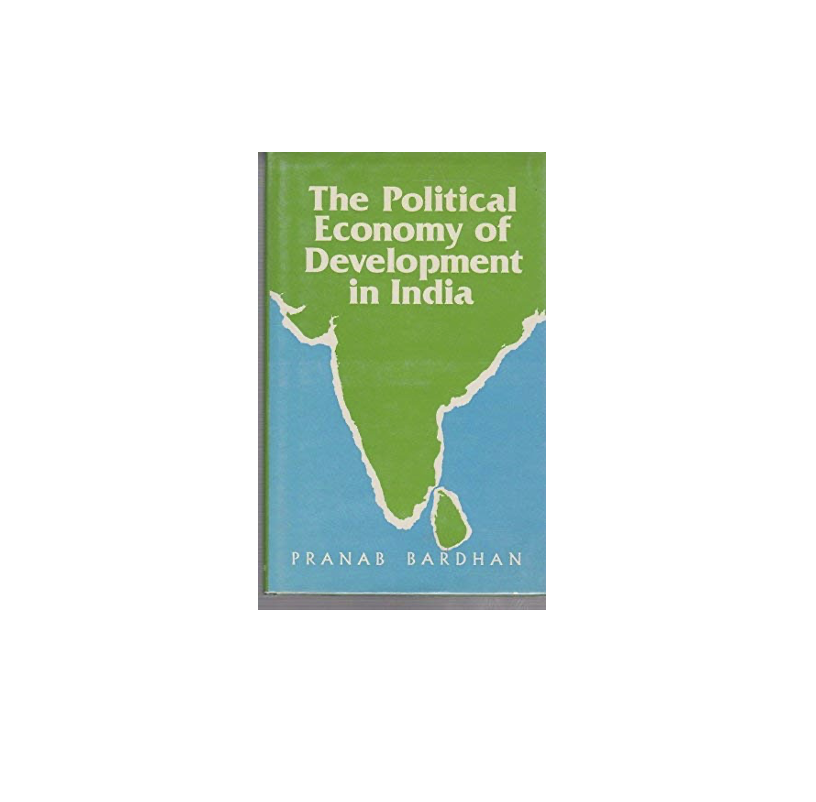

In 1984, economist Pranab Bardhan publishes The Political Economy of Development in India, providing an overview of the historical and political contexts of India’s economic evolution before liberalization.
Noted economist Pranab Bardhan’s The Political Economy of Development in India, published in 1984, provides a deep and nuanced analysis of the factors shaping India’s development trajectory. Originally published in 1984, and updated in subsequent editions, the book explores the intersection of politics and economics to explain why India’s development has been uneven and often suboptimal despite its potential.
Bardhan’s central thesis is that India’s slow progress post-Independence can be attributed to the interplay between three dominant interest groups: the rural landed elite, the industrial capitalist class, and the bureaucracy or state officials. He argues that these groups, each with their own vested interests, have wielded disproportionate influence on the policymaking process, often to the detriment of broader development goals. For example, the landed elite resisted land reforms, the capitalist class sought protectionist policies, and the bureaucracy perpetuated inefficiency and corruption. Together, these forces created a system that hindered effective policy implementation and led to stagnation in key sectors.
The book also critically examines the role of the state in India’s economic development, highlighting its failures in delivering equitable growth while acknowledging its achievements in areas like infrastructure and education. Bardhan discusses the limitations of centralized planning and the consequences of India’s complex federal structure, where regional politics often override national priorities.
In later editions, Bardhan reflects on India’s post-liberalization era, analyzing whether economic reforms have addressed the structural issues he originally identified. While acknowledging progress in certain areas, he remains skeptical about the reforms' ability to resolve deeply entrenched inequalities and institutional weaknesses.