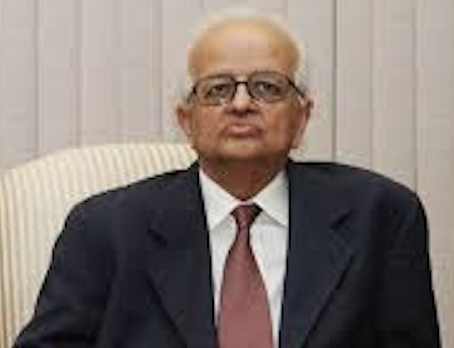

In 1992, economist Bimal Jalan publishes The Indian Economy: Problems and Prospects, which provides a nuanced understanding of the complexities of India’s economic environment in the early years after 1991.
The Indian Economy: Problems and Prospects, edited by Bimal Jalan and published in 1992, is a comprehensive anthology that delves into the critical issues and future possibilities of India’s economic landscape.
Jalan, a prominent economist and former governor of India’s central bank, the Reserve Bank of India, brings together essays by leading experts to explore the multifaceted challenges facing the Indian economy and to propose potential strategies for sustainable growth. For instance, Bipan Chandra provides a historical overview of fiscal policies during the colonial era, while the V.M. Dandekar assesses India’s economic performance from 1950 to 1990. Rakesh Mohan traces the evolution of industrial controls from the pre-Independence period. Other contributors include C.H. Hanumantha Rao, C. Rangarajan, Narendra Jadhav, Raja Chelliah, Sudipto Mundle, M. Govinda Rao, Jyoti and Kirit Parikh, Pravin Visaria, T.S. Papola, Pranab Bardhan, and Kaushik Basu, each addressing diverse aspects of the economy, including fiscal policy, industrial development, agricultural productivity, and external trade.
Each essay provides a deep dive into these topics, highlighting the structural impediments that have historically hindered India’s economic progress. The contributors examine the effects of regulatory policies, the role of public sector enterprises, and the impact of global economic trends on India’s development trajectory.
The authors also analyze the initial outcomes of the 1991 reforms and their implications for India’s growth prospects. They offer insights into how the country can harness its potential by addressing issues such as economic inequality, infrastructure deficits, and the need for further policy reforms.
Jalan’s professional expertise coupled with the authors’ thoughtful analysis allows them to offer informed perspectives on the strategies needed to foster a more robust and equitable economic future.