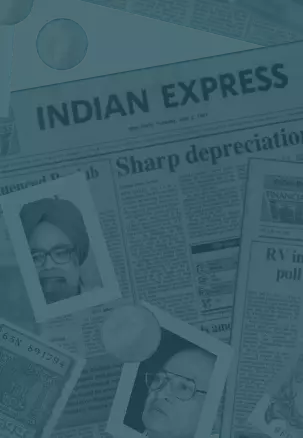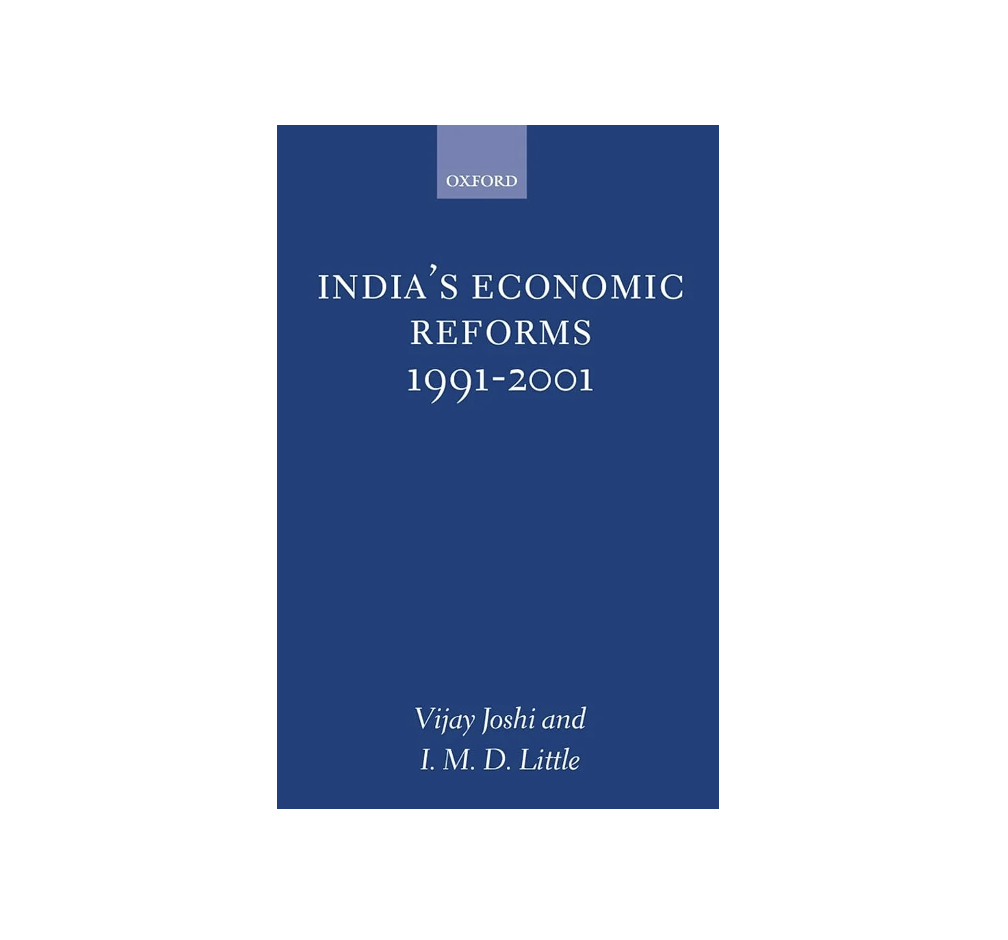

In 1996, economists Vijay Joshi and Ian D. Little publish India’s Economic Reforms, 1991–2001, an in-depth analysis of the impacts of liberalization.
Published in 1996, India’s Economic Reforms, 1991–2001, by economists Vijay Joshi and Ian D. Little, provides an in-depth analysis of the reforms India undertook during the 1990s. It is a follow up study to their earlier work, India: Macroeconomics and Political Economy, 1964–1991, which explores India's economic performance during the period of state-led development, highlighting the inefficiencies and stagnation caused by excessive regulation, protectionism, and fiscal mismanagement.
In India’s Economic Reforms, 1991–2001, Joshi and Little analyze the immediate and potential long-term impacts of the economic reforms on various sectors, including industry, agriculture, and services. They argue that these reforms were crucial for revitalizing India’s stagnating economy, boosting growth rates, and improving overall productivity. The book also explores the political and economic context that necessitated these reforms, including the severe balance-of-payments crisis India faced in 1991.
While recognizing the significant progress achieved, Joshi and Little also highlight areas where reforms were incomplete or inconsistent. They discuss the limited progress in critical areas such as labor market reforms, public sector restructuring, and agriculture. The authors emphasize that while liberalization brought substantial benefits, the reform process needed to be sustained and deepened to address structural inefficiencies and inequality.
Grounded in empirical evidence and theoretical insights, India’s Economic Reforms, 1991–2001 is both a celebration of India’s economic achievements and a critical roadmap for future reform.