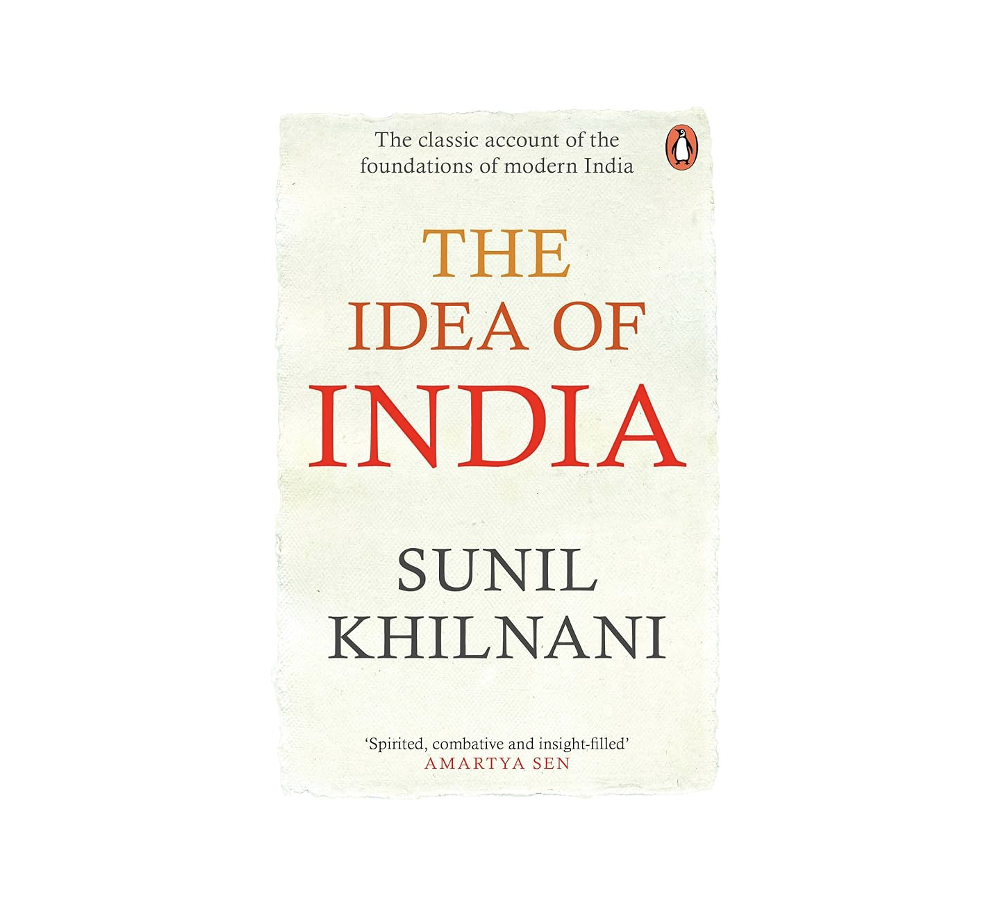

In 1997, Sunil Khilnani publishes The Idea of India, an analysis of India’s identity, diversity, and democracy.
The Idea of India, by Sunil Khilnani, is a profound exploration of India’s complex identity that traces its historical and cultural evolution since independence. Published in 1997, the book examines how India’s democracy, with its unique blend of unity and diversity, has shaped its identity and how this identity continues to adapt in response to global and internal challenges. Khilnani presents India as an ambitious experiment in nation building, a deeply pluralistic society striving to uphold democratic values and exist peacefully within a single political framework.
Through a blend of historical narrative and political analysis, Khilnani emphasizes the significance of the Indian Constitution as a guiding force for India’s democratic ethos, especially in a nation marked by vast social, religious, and linguistic diversity. He explores the roles of major figures such as Gandhi, Jawaharlal Nehru, and B. R. Ambedkar, who viewed India as a land of tolerance, secularism, and collective ambition. The book addresses economic liberalization, challenges in governance, and the ongoing struggle to balance tradition with modernity.
The Idea of India remains essential reading to understand how India has evolved as a democratic nation and how its foundational ideals continue to shape its aspirations, struggles, and place in the modern world.