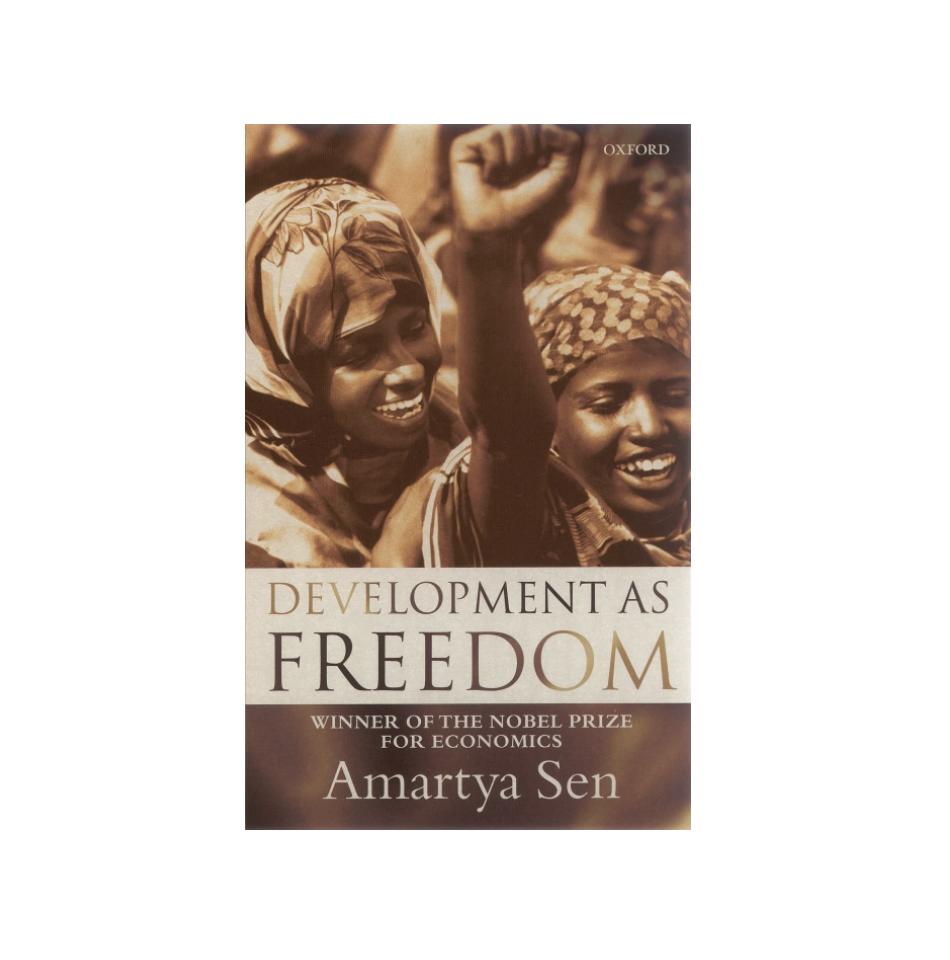

In 1999, Nobel laureate Amartya Sen publishes Development as Freedom, reframing development as a means to expand human freedom.
In Development as Freedom (1999), Nobel laureate Amartya Sen presents a unique perspective on development, arguing that true development goes beyond economic growth and instead aims to expand human freedoms. The book challenges traditional economic approaches by emphasizing that development should prioritize enhancing people’s capabilities—their ability to make choices and lead lives they value. Sen contends that poverty, lack of education, gender inequality, and inadequate healthcare are not merely economic setbacks but significant constraints on freedom.
Sen writes of five freedoms essential for development: political freedoms, economic facilities, social opportunities, transparency guarantees, and protective security. These interconnected freedoms, he argues, create an environment in which individuals have the ability to participate fully in society, contribute to the economy, and enhance their own well-being. For Sen, freedom is not only the means of development by fostering an environment in which people can access the resources they need to shape their lives, but its end.
Development as Freedom has had a lasting impact on development studies and policy making.