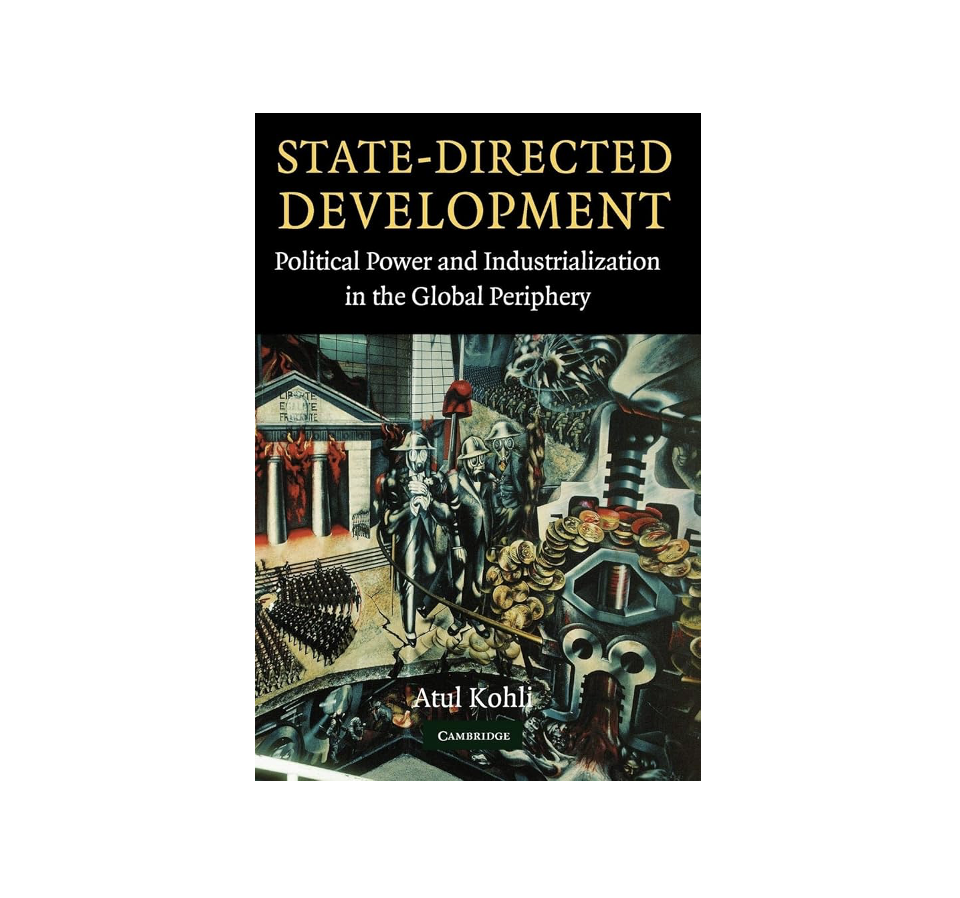

In 2004, political scientist Atul Kohli publishes State-Directed Development: Political Power and Industrialization in the Global Periphery, offering keen insight into the interplay between politics and economics in India’s development journey.
Published in 2004, State-Directed Development: Political Power and Industrialization in the Global Periphery, by Atul Kohli, offers a keen analysis of the role of the state in driving industrialization and economic development in developing countries. Kohli, a distinguished political scientist at Princeton University, examines the varying success of state-directed development across different regions, focusing on the political and institutional contexts that shape economic outcomes.
Kohli analyzes case studies of four countries: South Korea, Brazil, India, and Nigeria. He argues that the effectiveness of state intervention in economic development largely depends on the nature of the state’s power and its ability to implement coherent industrial policies.
Kohli categorizes India’s experience as “fragmented-multiclass,” referring to a state structure in which diverse and often-conflicting social groups influence policy making, leading to political compromises, bureaucratic inefficiencies, and inconsistent economic policies, which result in mixed development outcomes. He showcases how significant industrial achievements occurred alongside persistent inefficiencies and uneven growth.
He delves into the period following India’s independence, highlighting the adoption of a state-led development model under the leadership of Prime Minister Jawaharlal Nehru. This model emphasized heavy state control over key industries, central planning, and import substitution to foster industrial growth and self-reliance. Kohli critiques this approach by analyzing its mixed outcomes: while it led to the establishment of a broad industrial base and significant public sector enterprises, it also resulted in inefficiencies, bureaucratic red tape, and slow economic growth.
The book further explores the political and institutional factors that shaped India’s economic trajectory, emphasizing how political power and state capacity influenced the effectiveness of development policies. Kohli’s rigorous analysis provides valuable insights into the complexities of state-led development and the pivotal role of political structures in shaping economic outcomes.