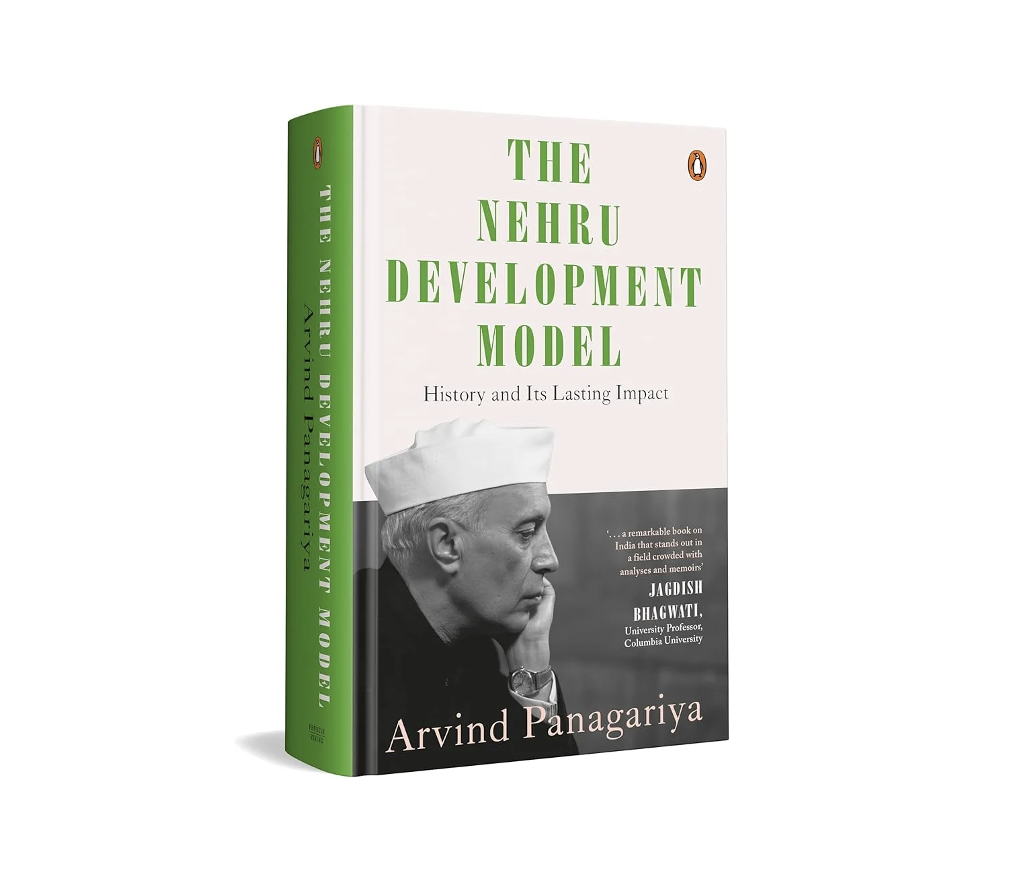

In 2024, Arvind Panagariya publishes The Nehru-Era: Economic History and Thought & Their Lasting Impact, assessing the Nehruvian economic legacy and its influence on modern India.
In The Nehru-Era: Economic History and Thought & Their Lasting Impact, Arvind Panagariya examines the economic policies and ideas of Jawaharlal Nehru, India’s first prime minister, and their lasting influence on India’s economic landscape. Panagariya analyzes how Nehru’s vision of a self-reliant, industrialized nation led to a mixed economy with economic central planning. Influenced by socialist ideals and colored by a distrust of colonial-era capitalist exploitation, Nehru’s approach focused on reducing dependence on imports, promoting domestic industries, and implementing Five-Year Plans as blueprints for economic development.
Panagariya assesses both the successes and limitations of Nehru’s economic model. While its focus on industrialization laid the foundation for India’s economic capabilities, the accompanying restrictive trade policies, overreliance on state-led enterprises, and limited encouragement of private entrepreneurship contributed to what pejoratively became known as the “Hindu rate of growth”—a period of slow economic progress. Panagariya argues that although Nehru’s policies played a pivotal role in shaping modern India’s economy in its early days, their limitations prompted the need for liberalization in the 1990s.
The Nehru-Era: Economic History and Thought & Their Lasting Impact provides valuable insights into the how India’s early economic policies continue to shape its development trajectory today.