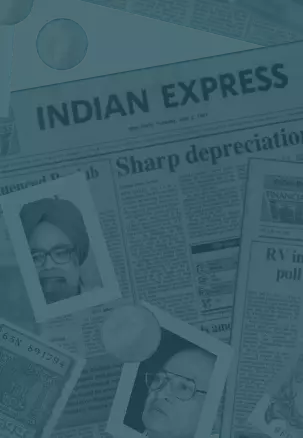

Both the 1960s and 1980s, dubbed the Lost Decade, saw economic stagnation and paved the way for economic reforms.
The term “lost decade” in the context of India’s economic history has been applied to both the 1960s and the 1980s, depending on the perspective being discussed. Each period was characterized by distinct economic challenges and shortcomings.
The 1960s are often seen as a lost decade due to stagnation and crises that stifled India’s development. Economic growth during this time averaged around 3.5 percent annually, famously referred to as the “Hindu rate of growth,” reflecting the lack of dynamism in the economy. Consecutive droughts in 1965–66 caused severe food shortages, forcing India to rely heavily on food aid from the United States under the PL-480 program. The situation was compounded by wars with China in 1962 and Pakistan in 1965, which drained resources, while political instability following the death of Prime Minister Nehru in 1964 further disrupted governance. Overemphasis on state-led planning and protectionism stifled industrial growth, and public sector inefficiencies became entrenched. This period was marked by missed opportunities for structural reforms in agriculture, trade, and industry, leaving India ill-prepared for future challenges.
The 1980s, though showing faster economic growth than before, were considered another lost decade due to unsustainable fiscal and external policies. Growth during this period was largely debt-driven, fueled by rising fiscal deficits and external borrowing rather than structural reforms or productivity improvements. Macroeconomic imbalances worsened, with public debt ballooning, inflation rising, and the trade deficit widening. Foreign exchange reserves became precariously low by the late 1980s, setting the stage for the 1991 balance-of-payments crisis. While incremental pro-business policies were introduced under Prime Ministers Indira Gandhi and Rajiv Gandhi, these measures were insufficient to address systemic inefficiencies, leaving the economy vulnerable.
The crisis reached its peak in 1991, when foreign exchange reserves dwindled to barely enough to cover three weeks of imports. This led to reforms in 1991 under the leadership of Prime Minister P. V. Narasimha Rao and Finance Minister Manmohan Singh.
The lost decades highlighted the need for structural reforms in the economy and paved the way for liberalization, which transformed India’s economic landscape.