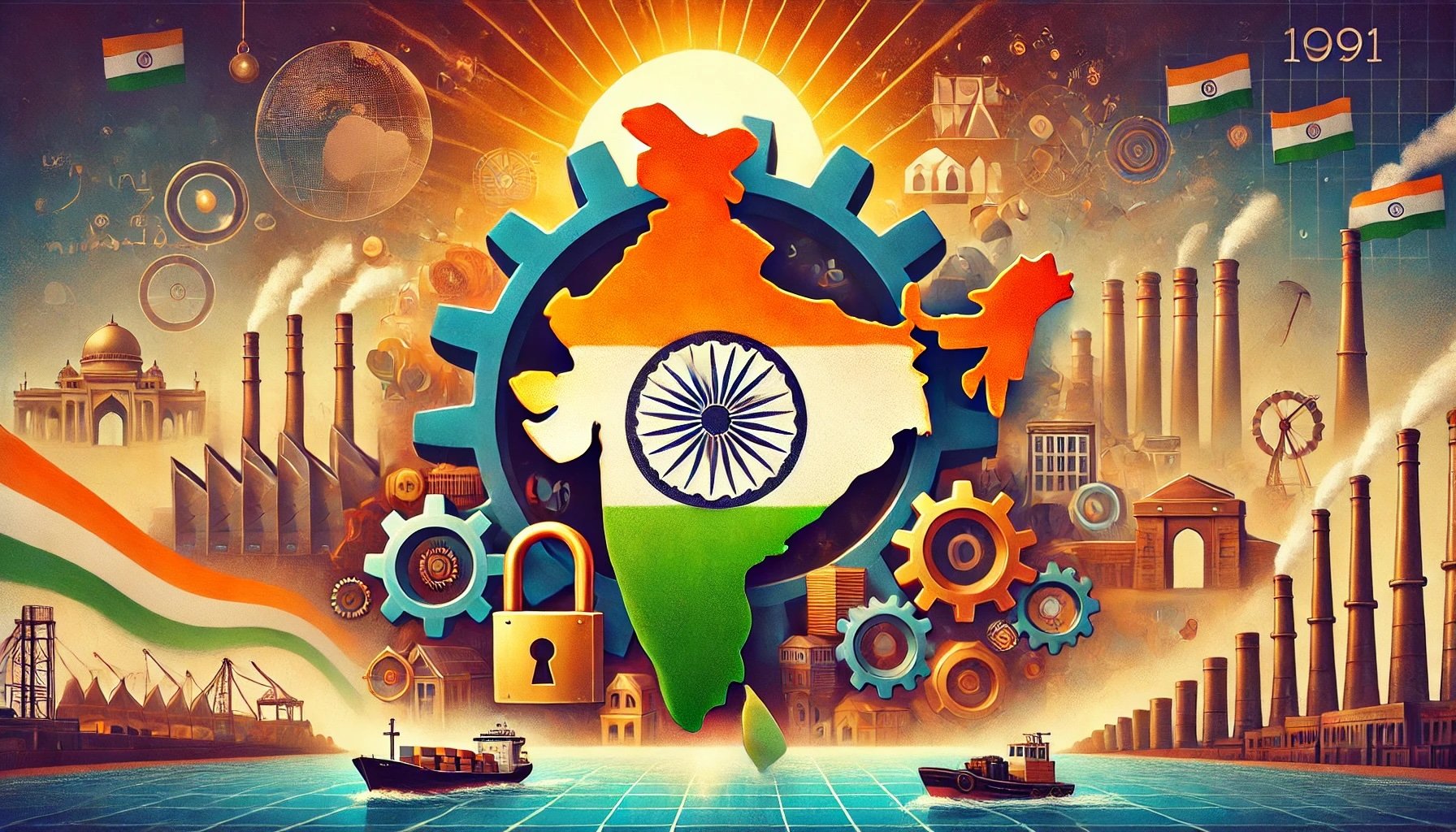

The Government of India introduces the New Economic Policy in 1991 to restore macroeconomic stability.
In 1991, while facing a severe balance-of-payments crisis, the Government of India introduced a slew of economic reforms under the aegis of the New Economic Policy (NEP). Key elements of the NEP included:
- Liberalization: The government removed many of the controls on private sector activity and opened up the economy to foreign investment.
- Privatization: The government began to privatize state-owned enterprises and reduce its role in the economy.
- Globalization: The government removed many barriers to trade and investment and integrated India’s economy with the global economy.
The NEP marked a significant shift in India’s economic policies, which had been based on import substitution and heavy government intervention. The reforms aimed to promote competition, increase efficiency, and attract foreign investment.
The impact of the NEP has been significant, with India experiencing higher economic growth rates and increased foreign investment in the years following the reforms. However, the benefits of the reforms have not been evenly distributed, with concerns raised about the impact on small businesses and the informal sector.
Nonetheless, the NEP remains a landmark event in India’s economic history and continues to shape the country’s economic policies.