
From independence in 1947 to liberalization in 1991, the License-Permit-Quota Raj governs the Indian economy, leading to economic inefficiencies and decades of slow growth.
The License-Permit-Quota Raj refers to the elaborate system of regulations, licenses, and quotas that governed India’s economy from independence in 1947 until liberalization in 1991. This framework, rooted in socialist principles, was designed to control and direct the economy, aiming to achieve self-reliance and equitable distribution of resources.
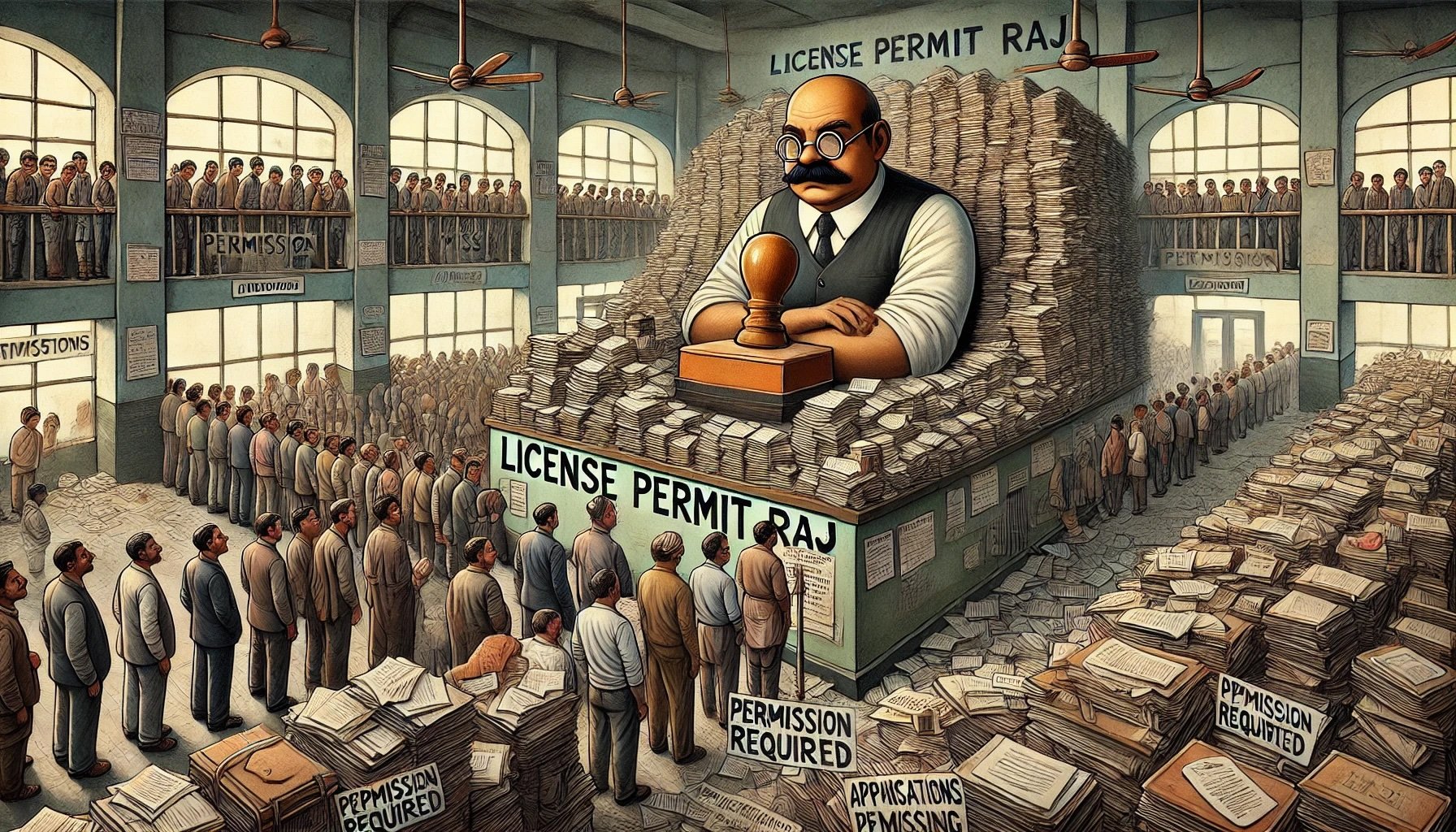
Under this regime, almost every aspect of economic activity required government permission. Businesses needed licenses to start operations, expand capacity, change product lines, and even shut down. These licenses were often difficult to obtain, involving cumbersome bureaucratic procedures, hefty bribes, and frequent delays. The objective was to prevent the concentration of economic power and ensure that resources were distributed according to the government’s development priorities in newly independent India.
This License-Permit-Quota Raj extended to foreign trade as well, with strict controls on imports and exports to protect domestic industries and conserve foreign exchange. Import licenses were required for a vast array of goods, and high tariffs were imposed to discourage imports. This protectionist stance aimed to foster domestic industry but often led to inefficiencies, the absence of economies of scale, and lack of competitiveness.
The quota system further complicated economic activities by imposing limits on production and distribution. For example, certain goods could only be produced up to a specified quantity, and raw materials were allocated based on government quotas. This was intended to ensure that critical resources were used efficiently and that essential goods were available to all sectors of society, but it typically reduced productivity by decreasing firm size and output.
While well intentioned, the License-Permit-Quota Raj led to significant inefficiency and corruption. The need for multiple permits and approvals created opportunities for rent-seeking and bribery as businesses navigated the complex regulatory landscape. Moreover, the stifling of competition and innovation resulted in sluggish economic growth.
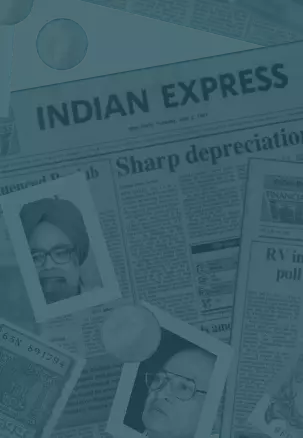
This system began to unravel in the late 1980s as India faced a severe balance-of-payments crisis. The crisis set the stage for the sweeping reforms of 1991, which dismantled much of the License-Permit-Quota Raj by deregulating industry and opening the economy to market forces and global competition. The reforms marked a significant turning point, setting India on a path of rapid economic growth and integration into the global economy.