
India’s role in the Non-Aligned Movement directly and indirectly affected its economic performance after independence.
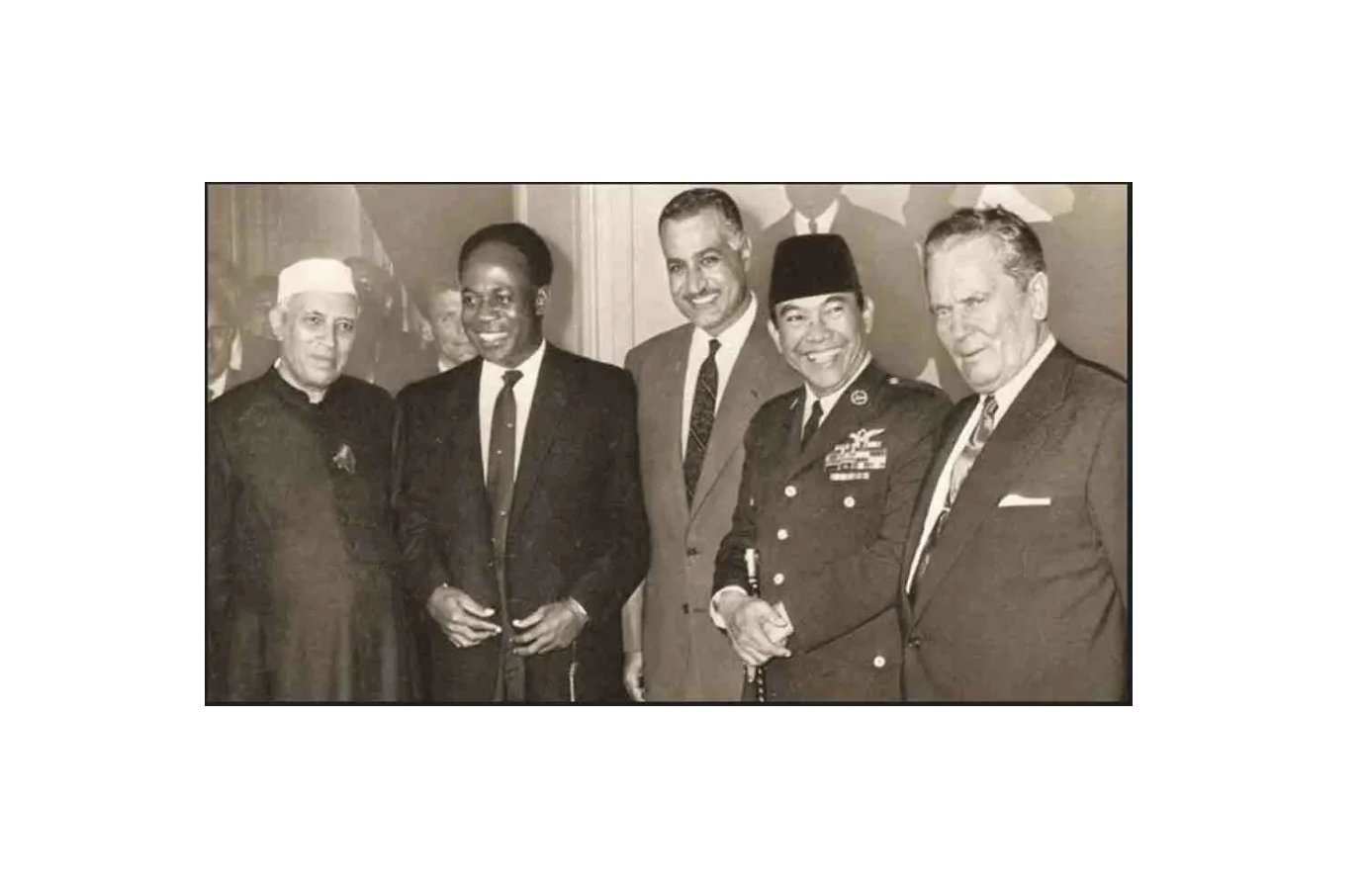
From the end of World War II in 1945 until the early 1990s, the Cold War was fought between the United States and its allies and the Soviet Union and its allies. It was a period of geopolitical tension and ideological conflict. Newly independent countries like India formed the Non-Aligned Movement (NAM) as an alternative to aligning with either the US or the Soviet bloc; NAM allowed them to pursue political and economic independence without being drawn into the superpower conflict.
As a founding member of NAM, India, under Prime Minister Jawaharlal Nehru, championed the principles of political independence, self-reliance, and nonalignment with the major power blocs. India’s role in NAM directly and indirectly affected its economic performance after independence. For instance, India’s cautious approach toward foreign investment, driven by its nonaligned stance, created a restrictive business environment. This limited the inflow of capital, technology, and expertise, which could have stimulated economic growth. Similarly, the nonalignment policy affected India’s trade relationships. By avoiding alignment with either the Western or Eastern bloc, India missed out on economic aid and favorable trade terms available to aligned countries. This resulted in less robust economic partnerships and fewer opportunities for trade expansion.
While NAM allowed India to maintain political sovereignty and diplomatic flexibility, it also contributed to economic isolation. However, while NAM likely indirectly influenced the economy, several other factors, like India’s focus on self-reliance and protectionism, led to low economic growth rates. It was not until the economic liberalization of 1991, which coincided with the end of the Cold War, that India opened up its economy and began to achieve higher economic growth.