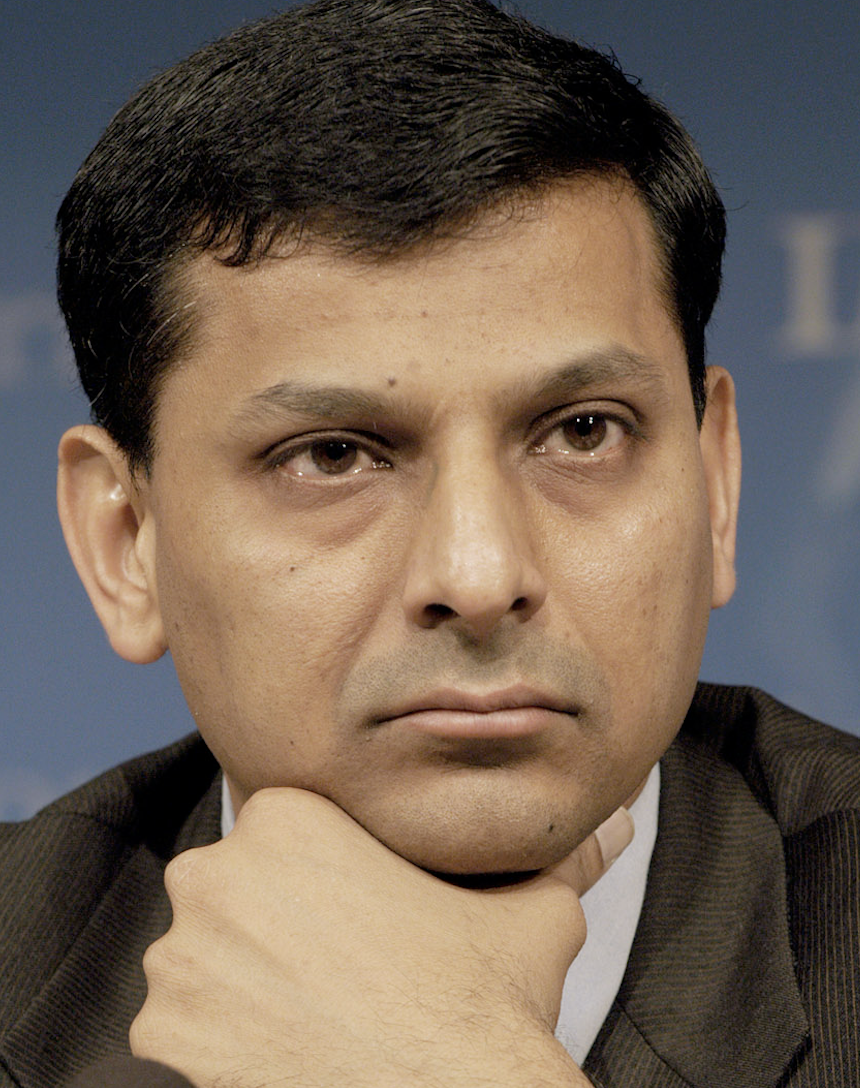

Report of the Committee on Financial Sector Reforms (2007), chaired by Raghuram Rajan
Download as PDF
In 2007, the deputy chairman of the Planning Commission, Montek Singh Ahluwalia, asked Dr. Raghuram Rajan, Professor, Graduate School of Business, University of Chicago, to organize a committee to write a report on the next generation of financial-sector reforms. The report, titled A Hundred Small Steps, aimed at taking a bird’s-eye view, highlighting the links between various needed reforms, and taking a generally consistent underlying approach. Members included Suman Bery (Director General, NCAER); Uday Kotak (CEO, Kotak Mahindra Bank); Rajiv Lall (CEO, IDFC); Vijay Mahajan (Chairman, Basix); Zia Mody (Senior Partner, AZB Partners); O. P. Bhatt (Chairman, State Bank of India); K. V. Kamath (Managing Director and CEO, ICICI Bank); Chitra Ramakrishna (Deputy Managing Director, NSE); R. Ravimohan (Managing Director and CEO, CRISIL); J. R. Varma (Professor, Indian Institute of Management, Ahmedabad); and R. Sridharan (Adviser (FR), Planning Commission, Convenor). It also included 'virtual' members: Rajesh Chakrabarti; Eswar Prasad; Joydeep Sengupta; Ajay Shah; Bahram Vakil; Sankar De; Ashok Jhunjhunwala; Nirmal Mohanty; Ramesh Ramanathan; and Vidhu Shekhar.
The report highlighted the significant gaps in both retail and wholesale financial services, noting that a majority of Indian households still relied on moneylenders for loans and that the financial sector was not sufficiently sophisticated to meet the needs of large corporations, public infrastructure, and small and medium enterprises. The report argued that political intervention and bureaucratic constraints hindered the financial system’s potential contribution to economic growth and inclusion. It projected that financial-sector reforms could increase the economic growth rate by 1–2 percent and create millions of well-paying jobs.
The committee proposed several key recommendations to address these issues. It emphasized expanding access to financial services such as payments, savings, insurance, and inflation-protected pensions, setting a national goal that 90 percent of households would have access to a deposit account and payments system within three years. The report advocated the entry of private, well-governed deposit-taking small finance banks with higher capital-adequacy norms and strict regulations against related-party transactions. It also suggested liberalizing the banking-correspondent regulations to enable a wide range of local agents to deliver financial services, thus leveraging existing networks such as cellphone kiosks and kirana shops. Additionally, the committee supported governance reforms for cooperative banks and proposed converting well-run cooperatives into small bank licenses, implementing a strong prompt corrective-action regime to ensure unviable cooperatives were closed.
To address priority-sector lending, the committee recommended revising mandates to focus on sectors truly needing access and introducing priority-sector lending certificates to create a market-driven interest subsidy. The report also called for a streamlined regulatory architecture, reducing the number of regulators and defining their jurisdiction based on functions rather than the forms of players. It proposed establishing a Financial Sector Oversight Agency to monitor macroeconomic risks and systemic financial conglomerates, ensuring coordinated supervisory action and addressing inter-regulatory conflicts. Additionally, the report suggested setting up a Financial Sector Appellate Tribunal to provide checks on regulatory excess and ensure accountability.
The committee emphasized the importance of credible selection processes for regulatory heads, higher remuneration, and lateral entry from the private sector to improve regulatory staff quality. It recommended periodic external evaluations of all financial regulators, with accountability to a parliamentary committee. For consumer protection, the report proposed establishing an Office of the Financial Ombudsman to enhance financial literacy and provide a neutral forum for debt settlement. It also suggested liberalizing interest rates for priority-sector lending while ensuring transparency and safeguards against exploitation. Strengthening the Deposit Insurance and Credit Guarantee Corporation’s capacity for risk monitoring and resolution of failing banks was also highlighted, emphasizing the need for a more explicit system of prompt corrective action and making deposit-insurance premiums more risk based.
Several major recommendations were accepted and implemented, including the introduction of small finance banks (licenses issued from 2015), liberalization of licensing for new private banks (new guidelines in 2013), use of technology for financial inclusion like the scheme Pradhan Mantri Jan Dhan Yojana (2014), and the launch of priority-sector lending certificates in 2016 to facilitate priority-sector lending requirements. However, some significant recommendations were rejected or only partially implemented. While the Reserve Bank of India adopted an inflation-targeting framework in 2016, it did not move to a single-instrument approach as recommended. The recommendation to reduce government ownership of public banks to below 50 percent saw limited enactment, with the government retaining control over most major banks. The proposed comprehensive Financial Sector Oversight Agency to oversee systemic risks was also not established, with the regulatory structure remaining fragmented across multiple regulators.
The report identified gaps in access to financial services for households and businesses, emphasizing the need to expand inclusion, improve regulatory efficiency, and enhance governance in the financial sector. It proposed measures like introducing small finance banks, reforming cooperative banking, creating market-driven mechanisms for priority-sector lending, and streamlining regulatory oversight. These reforms aimed to foster financial inclusion, strengthen the sector’s contribution to growth, and ensure systemic stability.