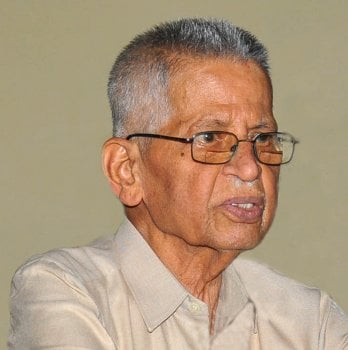

Report of the Committee on Model Rules of Stock Exchanges (2001), chaired by M. R. Mayya
Download as PDF
On May 14, 1997, the Securities and Exchange Board of India (SEBI) formed a committee to examine and reform the governance structures of stock exchanges across India. The committee, led by Shri M. R. Mayya, former executive director of the Bombay Stock Exchange, included prominent members from various stock exchanges, SEBI, and related institutions. The committee’s primary task was to draft a uniform set of model rules to be adopted by all recognized stock exchanges in the country. These model rules would standardize governance, operations, and investor protection across the 24 stock exchanges recognized under the Securities Contracts (Regulation) Act of 1956, including major exchanges. Members included R. C. Mathur (Former Executive Director, The Stock Exchange); A. N. Joshi (Executive Director, The Stock Exchange); Ravi Narain (Managing Director & CEO, National Stock Exchange of India Ltd); M. L. Soneji (Former Executive Director, The Stock Exchange, and presently Director and CEO, National Securities Clearing Corporation Ltd); T. Prem Kumar (Former President, The Madras Stock Exchange Ltd); S. P. Narang (Secretary, The Institute of Company Secretaries of India); V. K. Agarwal (Director (Research), The Institute of Company Secretaries of India); Joseph Massey (Managing Director, Inter-Connected Stock Exchange of India Ltd); Deena Mehta (Director / Vice President, The Stock Exchange); M. D. Patel / Pratip Kar (Executive Directors, SEBI); D. N. Raval (Executive Director, SEBI); and N. Parakh / P.K. Bindlish / S.V. Muralidhar Rao (Division Chiefs, SEBI).
The committee conducted a thorough review of the existing articles, memoranda of association, rules, bylaws, and regulations of the stock exchanges. It recommended several key reforms, notably in governance and management. It proposed that the title of executive director be changed to managing director, with a fixed 5-year tenure, and the managing director be empowered with full executive authority over the day-to-day operations of the stock exchanges. The committee also emphasized the importance of a well-formed governing board, setting an age limit of 75 years for its members, and recommended a clear separation of powers between the governing board and the managing director to prevent conflicts of interest. Furthermore, the committee advocated establishing standing committees such as an Audit Committee, Membership Selection Committee, Investors’ Services Committee, and Ethics Committee to oversee various critical functions, ensuring accountability and transparency in the exchanges’ operations.
The committee’s recommendations were aimed at enhancing corporate governance and protecting investors’ interests. It proposed creating funds such as the Settlement Guarantee Fund and Investors’ Protection Fund to safeguard investors and ensure the smooth functioning of the exchanges in case of default. The committee also set out a detailed disciplinary framework to maintain order within the stock exchanges, empowering the managing director and a Disciplinary Action Committee to enforce rules and penalties for misconduct. By recommending these comprehensive reforms, the committee sought to align the governance and operational practices of Indian stock exchanges with global standards, ensuring their robustness and transparency in the evolving financial landscape.