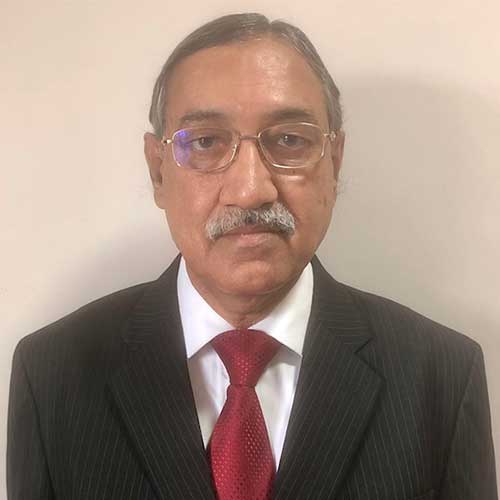

Report of the Working Group on Interest Rate Futures (2008), chaired by V. K. Sharma
Download as PDF
The Reserve Bank of India’s (RBI’s) Working Group on Interest Rate Futures (IRFs), chaired by V. K. Sharma, Executive Director, RBI, was tasked with reviewing the performance of the IRF market in India and recommending measures to revive the market. IRFs were first introduced in India in 2003, but they failed to attract significant participation because of design flaws, specifically the absence of physical settlement and their reliance on a zero-coupon yield curve for pricing. The working group identified these issues as key reasons for the lack of market depth. It highlighted that banks, insurance companies, primary dealers, and provident funds, which bore nearly 88 percent of the interest rate risk from government securities, required a better hedging mechanism than the existing interest rate swaps. Members of the group included T. C. Nair (Whole Time Member, Securities & Exchange Board of India); Neeraj Ghambhir (Chairman, Fixed Income Money Market and Derivatives Association of India (FIMMDA)); Uday Kotak (Managing Director & Chief Executive Officer, Kotak Mahindra Bank Ltd.); A. P. Kurian (Chairman, Association of Mutual Funds of India); M. M. Lateef (Deputy Managing Director & Chief Financial Officer, State Bank of India); Ravi Narain (Managing Director, National Stock Exchange); and Susan Thomas (Assistant Professor, Indira Gandhi Institute of Development Research).
The working group recommended introducing physically settled futures contracts based on a 10-year coupon-bearing bond as the main product, with additional contracts for 2-year, 5-year, and 30-year securities depending on the market’s response to the initial product. It argued that physical settlement would better align IRF prices with the underlying market and allow for effective cash-futures arbitrage, an essential mechanism to maintain price consistency between futures and the underlying securities. They suggested allowing banks to take both trading and hedging positions in IRFs to enhance liquidity in the market, an option that was previously restricted to primary dealers. The group also proposed aligning accounting standards between IRFs and the existing swaps, bridging the regulatory gap between the two instruments, and exempting IRFs from securities transaction tax to boost market participation.
The group recommended allowing Foreign Institutional Investors and Non-Resident Indians to participate in IRF trading under stricter limits. Foreign Institutional Investors would be permitted to take long positions in IRFs up to the maximum value of their investments in the cash market, ensuring their futures positions align with their allowable cash market exposure. For short positions, FIIs would only be permitted to hedge risks against their current and specific investments in the cash market, defined as their "actual exposure" in terms of existing holdings, not potential or theoretical exposure. The group emphasized the need to develop a strong securities-lending mechanism and a liquid repo market to support short selling of, and arbitrage in, government securities. These measures, the group argued, would deepen both the government-securities and corporate-debt markets. Additionally, the group recommended retaining cash-settled contracts for 91-day Treasury bills and introducing a contract based on short-term interest rates, such as the Mumbai Inter-bank Offered Rate, to address short-term interest rate risk effectively.
In a comment on the report, Dr. Susan Thomas, a member of the group, critiqued several recommendations. She emphasized that market success relies not on restrictive preconditions or exclusive mechanisms but on fostering competitive principles, including low barriers to entry and the involvement of diverse participants.. She disagreed with the notion that developing a liquid repo market is a prerequisite for launching interest rate derivatives. Thomas also opposed the view that physical settlement is the only viable settlement option, citing the success of cash-settled markets like Eurodollar futures. Additionally, she argued against limiting short selling in cash markets to certain participants, as this would reduce market efficiency and liquidity.
The RBI accepted key recommendations of the working group, including introducing physically settled IRFs based on 10-year bonds and allowing banks to take trading positions in IRFs. Additionally, accounting standards for IRFs and interest rate swaps were unified, ensuring consistent treatment across financial instruments. However, the recommendation to introduce contracts based on short-term interest rates was not followed.
The report identifies design flaws, regulatory restrictions, and limited participation as key barriers to India’s IRF market. To address these, it recommends physically settled contracts, expanded trading permissions for banks, and harmonized accounting standards to improve liquidity and align IRFs with underlying markets.